

25 National Champions Powering Transformative Science for Healthy Lives on a Healthy Planet
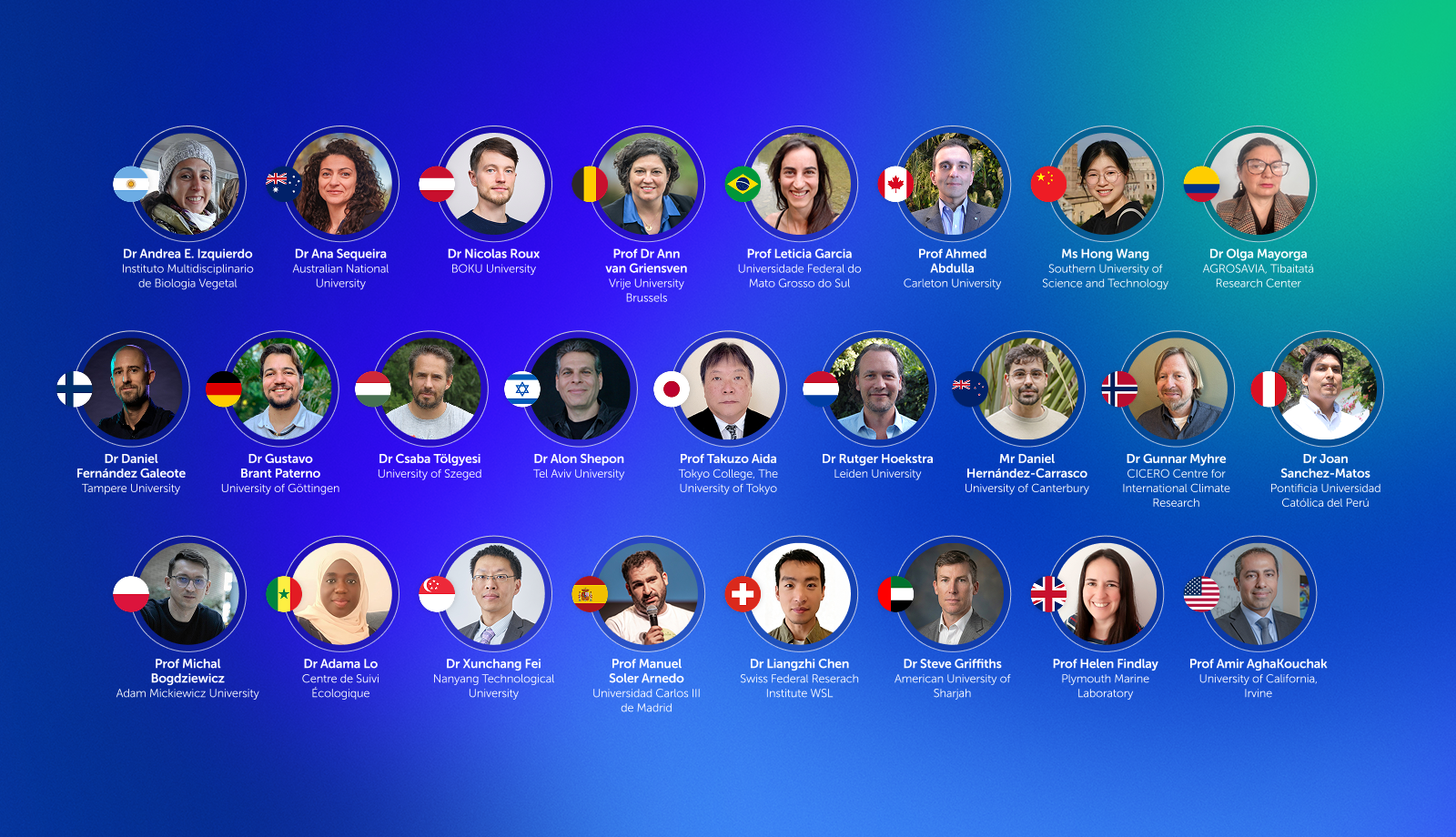
The Frontiers Planet Prize names its 25 National Champions for 2026 – scientists presenting scalable, evidence-based solutions to the planetary crisis.
Following an independent scientific assessment by 100 experts, chaired by Professor Johan Rockström, the developer of the Planetary Boundaries framework, the prize accelerates global scientific solutions most urgently needed to safeguard planetary health.
Each National Champion will have the opportunity to present their work at the Davos 2027, at the Frontiers Planet Prize Award Ceremony, where the International Champions will be announced, each awarded 1 million USD to advance their work
25 National Champions provided insights for a new report launched today with United Nations University (UNU) and the Potsdam Institute for Climate Impact Research, which identifies practical policy solutions to addressing the planetary poly-crisis, spanning climate change, water systems, biodiversity loss and economic governance.
“The twenty-five national winners of the 2026 Frontiers Planet Prize exemplify the diversity of research that is so urgently needed. Spanning a range of topics, disciplines, and methodological approaches, they share a defining quality: excellence in advancing our understanding of the Earth system and unlocking new frontiers in the solution space.” - Prof Johan Rockström, Director, Potsdam Institute for Climate Impact Research
As the ocean absorbs our rising CO₂ emissions, 2025 brought a stark confirmation: ocean acidification has become the seventh planetary boundary to be crossed, joining a growing list of indicators that we are eroding the planet's resilience. Research continues to compound these warnings year on year, but with directed and sustained action, the trajectory can change. The Biodiversity Beyond National Jurisdiction (BBNJ) Agreement (High Seas Treaty) entered into force on 17 January 2026, establishing a global framework to conserve and sustainably use marine biodiversity in areas beyond national jurisdiction, covering nearly two-thirds of the ocean. This landmark achievement is a powerful demonstration of what is possible when science connects with policy. Earth Day 2026 continues in that spirit. Its theme, 'Our Power, Our Planet', reflects the same conviction that drives the Frontiers Planet Prize: that collective, science-led action can counter even the gravest environmental challenges.
The COVID-19 pandemic has shown what this response looks like in practice: the democratisation of research outputs, accelerated collaboration, and unprecedented engagement between scientists and policymakers compressed years of progress into months. The planetary crisis demands that same urgency, and with it, an evolution in the role of scientists - one that embeds transdisciplinarity, systems thinking, and the direct translation of research into action.
The Frontiers Planet Prize was created to achieve exactly this: as the world's largest prize in planetary science, as of today, it draws on a community of over 20,000 scientists across 735 institutions in 69 countries, nominated by 23 leading academies worldwide. The National Champions of the 4th edition have stepped up with pioneering, transdisciplinary solutions. Each of the 25 research papers represents the direct translation of frontier science into actionable pathways, already mobilised for real-world impact through a UNU policy report that distils their work into stepwise policy pathways. Together, they go beyond laying out the road to healthy lives on a healthy planet; they also point the way to more prosperous lives on a resilient planet.
These scientists are already doing what the moment demands. Now, it is time to meet them.
Congratulations to the National Champions of the 4th Edition:
Understanding and safeguarding our water future:
Belgium: Professor Dr Ann van Griensven, Vrije Universiteit Brussel (VUB), Combined impacts of climate and land-use change on future water resources in Africa
China: Hong Wang, Southern University of Science and Technology (SUSTech), Anthropogenic climate change has influenced global river flow seasonality
Peru: Dr Joan Sanchez-Matos, Pontificia Universidad Católica del Perú (PUCP), AWARE characterization factors in Peru encompassing El Niño and climate change events: does increased water availability guarantee less water scarcity?
Switzerland: Dr Liangzhi Chen, Swiss Federal Research Institute for Forest, Snow and Landscape Research WSL, Global increase in the occurrence and impact of multiyear droughts
United States: Professor Amir AghaKouchak, University of California, Irvine; Global assessment and hotspots of lake drought
Measuring and mitigating emissions:
Canada: Professor Ahmed Abdulla, Carleton University, Integrating climate and physical constraints into assessments of net capture from direct air capture facilities
Hungary: Dr Csaba Tölgyesi, University of Szeged, Limited carbon sequestration potential from global ecosystem restoration
Norway: Dr Gunnar Myhre, CICERO Center for International Climate Research, Observed trend in Earth energy imbalance may provide a constraint for low climate sensitivity models
Singapore: Dr Xunchang Fei, Nanyang Technological University (NTU), Methane emissions from landfills differentially underestimated worldwide
Spain: Professor Manuel Soler Arnedo, Universidad Carlos III de Madrid (UC3M), Climate- optimized flight planning can effectively reduce the environmental footprint of aviation in Europe at low operational costs
United Arab Emirates: Dr Steve Griffiths, American University of Sharjah (AUS), Chemistry advances driving industrial carbon capture technologies
Restoring and building resilience into our ecosystems:
Australia: Dr Ana Sequeira, The Australian National University (ANU), Global tracking of marine megafauna space use reveals how to achieve conservation targets
Brazil: Dr Letícia Garcia, Universidade Federal do Mato Grosso do Sul, Mapping Resilient Landscapes to Climate Change in a Megadiverse Country
Colombia: Dr Olga Mayorga, Tibaitatá Research Center, Colombian Corporation of Agricultural Research (ARGOSAVIA), The contribution of local shrubs to the carbon footprint reduction of traditional dairy systems in Cundinamarca, Colombia
Germany: Dr Gustavo Brant Paterno, University of Göttingen, Diverse and larger tree islands promote native tree diversity in oil palm landscapes
New Zealand: Daniel Hernández-Carrasco, University of Canterbury, Ecological and evolutionary consequences of changing seasonality
Poland: Professor Michał Bogdziewicz, Adam Mickiewicz University, Growth decline in European beech associated with temperature-driven increase in reproductive allocation
Senegal: Dr Adama Lo, Centre de Suivi Écologique (CSE), Remote Sensing-Based Assessment of Dry-Season Forage Quality for Improved Rangeland Management in Sahelian Ecosystems
United Kingdom: Professor Helen Findlay, Plymouth Marine Laboratory, Ocean Acidification: Another Planetary Boundary Crossed
Driving systemic change through innovation:
Argentina: Dr Andrea E. Izquierdo, Multidisciplinary Institute of Plant Biology (IMBIV), CONICET-National University of Córdoba, Integrating local and Indigenous knowledge with sustainable development goals in lithium mining impact assessment for a fair energy transition
Austria: Dr Nicolas Roux, BOKU University, Vienna, Integrating sufficiency in the trade and biodiversity agenda of the European Union
Finland: Dr Daniel Fernández Galeote, Tampere University, Play, games, and gamification to support sustainability transitions: a scoping review and research agenda
Israel: Dr Alon Shepon, Tel Aviv University, The environmental and social opportunities of reducing sugar intake
Japan: Professor Takuzo Aida, The University of Tokyo, Mechanically strong yet metabolizable supramolecular plastics by desalting upon phase separation
The Netherlands: Dr Rutger Hoekstra, Leiden University, Beyond GDP: a review and conceptual framework for measuring sustainable and inclusive wellbeing.
The solutions span the full breadth of the planetary boundary crisis. From tracking the migration corridors of marine megafauna to mapping drought hotspots in lakes worldwide, from quantifying methane underestimation at landfills to climate-optimising flight paths across Europe, from reimagining plastics at the molecular level to rethinking how we measure prosperity beyond GDP — these 25 papers encompass the interconnected systems that sustain life on Earth, addressing water futures in Africa, carbon sequestration limits, rangeland management in the Sahel, biodiversity in oil palm landscapes, and the environmental and social costs of sugar. Local and indigenous communities are no longer recognised as mere sources of insight, but as equitable collaborators in the research process, whose knowledge systems hold deep, place-based understanding that formal science cannot replicate. Threaded through the research is a deeper shift in how knowledge itself is understood, one accelerated by the dissolution of silos and the regeneration of models and knowledge systems across disciplines.
As National Champions of the 4th edition, each scientist will have the opportunity to present their work at the Frontiers Planet Prize Award Ceremony at Davos 2027, part of the Frontiers Science House, a platform where scientific leadership sits at the same table as representatives of governance, finance, technology and civil society. Three International Champions will be announced at the ceremony, each awarded USD $1 million to advance their research. The connections forged on this platform amplify the reach of breakthrough science, opening new collaborations and bringing researchers into direct dialogue with the decision-makers who can accelerate their solutions from insight to impact. From today's announcement to the Davos stage, these scientists are already doing what the moment demands: translating the best of human knowledge into action for a more resilient world. Scientists empower society, and that work starts here.
“We are no longer short of warnings; we are short of solutions and time. The science that exists to address the planetary crisis does not reach the right decision-makers quickly and at scale. By identifying and supporting the most robust, relevant and scalable research worldwide, the Frontiers Planet Prize helps turn truly transformative science into collective action for healthy lives on a healthy planet. In doing so, we hope to inspire the scientists around the world to step up the search for solutions. We really have no time to waste.”- Prof Jean-Claude Burgelman, Director, Frontiers Planet Prize
As planetary pressures intensify, the Prize invites the global research community, policymakers, funders and innovators to work together in translating scientific breakthroughs into real-world solutions.
There is still much to be done to safeguard our planet, and lasting progress depends on collective effort.
We invite institutions and researchers worldwide to join the 5th Edition of the Prize.
For information on how to get involved, please contact us at info@frontiersplanetprize.org