

Global multiyear droughts: a silent destabiliser of Earth’s life-support systems

Liangzhi Chen
Swiss Federal Institute for Forest, Snow and Landscape Research WSL
DOI: 10.25453/fpprize.32065881
Global increase in the occurrence and impact of multiyear droughts(Science, 2025)
“Prolonged droughts are no longer anomalies; they are an emerging feature of a warming world.”
Why multiyear droughts matter
While science often focuses on flash or seasonal droughts, multiyear droughts represent a far more dangerous "slow-onset extreme" that can permanently alter ecosystems. Our research addresses a critical gap: the lack of a consistent global framework to identify, compare, and rank these prolonged water deficits. Without standardized benchmarks for historical events, societies remain unprepared for the cumulative and cascading impacts of water stress that persist for years or even decades.
This matters profoundly for the planet today. As climate change intensifies the hydrological cycle, the risk is not only that droughts become more frequent, but that they persist longer and affect larger regions. Multiyear droughts directly threaten the planetary boundary of freshwater change, while also interacting strongly with biosphere integrity, biogeochemical flows, and climate change. When ecosystems experience sustained water limitation, vegetation productivity declines, carbon uptake weakens, and feedbacks to the climate system can amplify warming. Understanding where and how these droughts are intensifying is therefore essential for safeguarding Earth’s life-support systems.
A global, quantitative lens on prolonged drought risk
The core contribution of my work is the development of a comprehensive global database of multiyear droughts, identifying and ranking events by both their climatic severity and their ecological impact. By integrating long-term climate records with indicators of vegetation greenness, the study moves beyond meteorological definitions of drought to explore what matters most: how ecosystems respond.
This approach reveals several critical insights. First, multiyear droughts have increased globally in both occurrence and impact over recent decades. Second, their ecological effects are highly uneven depending on the vegetation types: some regions exhibit remarkable resilience, while others show disproportionate losses in vegetation activity under similar climatic stress. Third, the most vulnerable drought-affected ecosystems often span multiple administrative and national boundaries, highlighting a mismatch between ecological processes and governance structures.
By providing a transparent and reproducible ranking of multiyear drought events, the research establishes a quantitative baseline against which future changes can be assessed. This is a crucial step toward making prolonged drought risk visible, comparable, and actionable at regional to global scales.
From insight to action: pathways for implementation
A central aim of the research is not only to highlight the problem, but to enable solutions. The database and analytical framework are designed to be directly usable by policymakers and civil society.
Policy implementation is a key pathway. The identification of drought-prone and ecologically vulnerable regions provides a scientific basis for integrating multiyear drought risk into national and transboundary early warning systems. Unlike short-term drought indicators, these metrics highlight areas where sustained intervention is needed—such as long-term water allocation planning, ecosystem restoration, or adaptive land management. Climate adaptation strategies can use these rankings to prioritise investments where prolonged water stress poses the greater risk to ecological and societal stability.
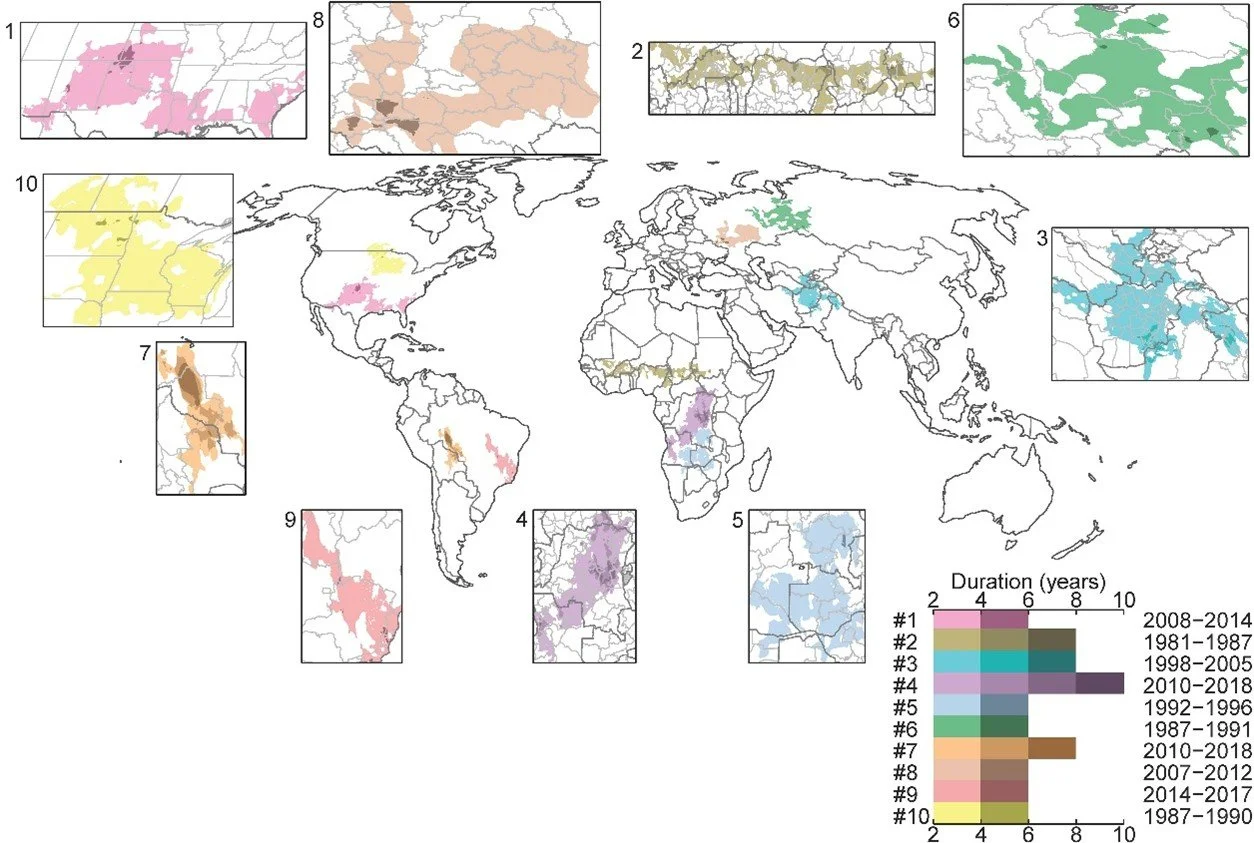
Fig. 1. Top 10 multiyear drought events within the period 1980 to 2018 ranked in the study.
Equally important is the role of civil society and international cooperation. Because many of the most vulnerable ecosystems cross political borders, coordinated action is essential. The research provides an evidence base that can support transboundary water governance, shared monitoring initiatives, and collaborative conservation strategies, helping align ecological realities with institutional responses.
Tangible and emerging impacts
The immediate impact of this work lies in its ability to reframe how drought risk is understood. By shifting attention from flash extremes to prolonged, cumulative stress, the research changes the questions that decision-makers ask. Where are ecosystems approaching irreversible thresholds? Which regions face compounding risks to water, food, and carbon cycling? And where can early intervention still prevent long-term degradation?
Beyond conceptual impact, the dataset is positioned for integration into operational tools. Its global scope and consistent methodology make it suitable for incorporation into climate risk assessments, adaptation planning frameworks, and Earth system models. As awareness of multiyear drought risk grows, the framework offers a ready-made foundation for scaling applications across sectors and regions.
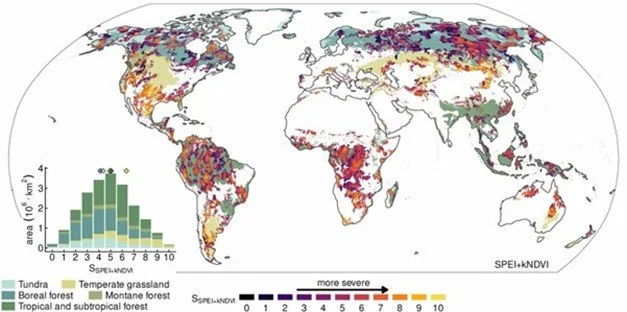
Fig. 2. Global risk assessment of multiyear droughts and their ecological consequences
In the longer term, the work contributes to anticipating and potentially avoiding tipping points. Prolonged drought can push ecosystems beyond recovery, leading to shifts in vegetation states and mortality, loss of biodiversity, and persistent changes in land–atmosphere feedbacks. By identifying where such risks are highest, the research supports proactive strategies rather than reactive crisis management.
Advancing planetary boundary science
At its core, this research advances planetary boundary science by strengthening the links between climate extremes, ecosystem functioning, and Earth system stability. Multiyear droughts sit at the intersection of several planetary boundaries, yet they have remained underrepresented in global assessments.
By quantifying how sustained water stress affects vegetation dynamics at scale, the study provides a pioneering piece in understanding how the freshwater boundary relates to biosphere integrity and biogeochemical flows. Declines in vegetation productivity during prolonged droughts have direct implications for carbon cycling, nutrient retention, and land–climate feedbacks. Incorporating these dynamics into planetary boundary assessments improves our ability to evaluate whether Earth’s systems remain within a safe operating space. Crucially, the work also highlights that staying within planetary boundaries is not only about global averages, but about regional vulnerabilities and cumulative stress. Recognising and monitoring these pressures is essential for guiding humanity back toward a safer trajectory.
Looking forward
Prolonged droughts are no longer rare anomalies; they are an emerging feature of a warming world. Addressing their impacts requires a shift in perspective—from short-term responses to sustained, coordinated action grounded in Earth system science.
By making multiyear drought risk visible, measurable, and comparable, my research aims to support that shift. It offers tools to inform policy, guide investment, and foster collaboration across borders and sectors. In doing so, it contributes to the broader effort of planetary boundary science: ensuring that human activities remain compatible with the resilience of the Earth system on which we all depend.