

Rethinking water scarcity in Peru under climate change-driven and El Niño-disrupted scenarios

Joan Sanchez-Matos
Pontifical Catholic University of Peru
DOI: 10.25453/fpprize.32065914
AWARE characterization factors in Peru encompassing El Niño and climate change events: does increased water availability guarantee less water scarcity? (The International Journal of Life Cycle Assessment, 2024)
“By refining the AWARE model with high-resolution data and climate change projections, we connect global planetary diagnoses with territorial management tools.”
Water scarcity is a pressing global environmental and social concern. As outlined in the planetary boundaries framework, we have transgressed the safe operating space for freshwater use. In fact, the detrimental effects of climate change on the water cycle, coupled with increasing human demand for water in recent decades, have elevated water scarcity at a global level, with the greatest pressures occurring in the southern hemisphere.
Peru is a prototypical example of the hydraulic heterogeneity and the potential vulnerability of the South American continent in terms of water scarcity. In fact, Peru shows a high level of asymmetry regarding its three main hydrographic regions (i.e., Pacific, Titicaca and Amazon basins). While the Pacific basin concentrates almost the totality of arid and hyper-arid areas and barely 2% of the Peruvian freshwater volume, it is pressured by almost three-quarters of Peru’s population and 80% of agricultural water demand (Sanchez-Matos et al., 2023). Furthermore, during moderate or strong El Niño events, which pseudo-cyclically affect the Peruvian coast, heavy rainfall, located particularly along the Northern Peruvian coast, triggers detrimental effects on water storage and supply systems, agricultural areas, and urban infrastructure, affecting millions of people.
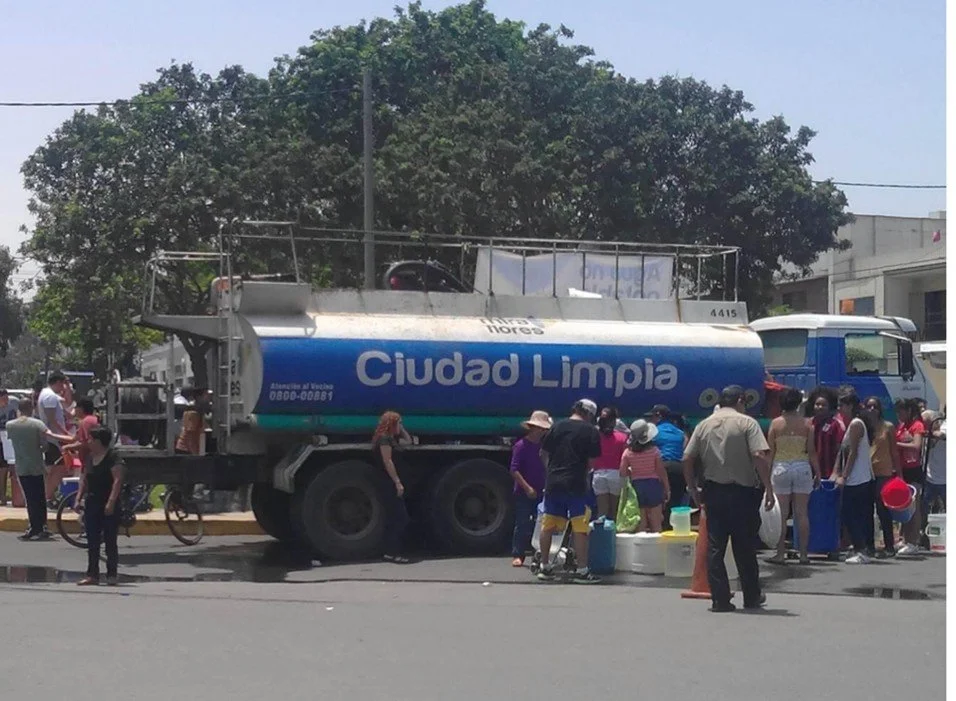
Figure 1. Disruption of tap water for domestic use due to damage in the water supply system in Lima in March 2017 due to a moderate El Niño event (Vázquez-Rowe et al., 2017). The city was left without running water for several days because of extremely high turbidity in the river Rímac, which left the main potable treatment plant inoperative.
Water Footprint (WF) and Life Cycle Assessment (LCA) are metrics used to represent water usage. The methods used to generate these metrics are based on global models and, therefore, use general assumptions to provide far-reaching geographic coverage. This can greatly increase uncertainty levels when site-specific conditions differ from common hydric behaviors. This is a crucial issue along the Peruvian coast due to extreme weather conditions, with areas withstanding long hyper-arid conditions and torrential rainfall in erratic cycles. The explosive agricultural expansion in recent years in this region has also increased water scarcity, combined with the increasing population density and, therefore, economic activity in this corner of the world. Pressure will continue to increase due to the mounting effects of global warming.
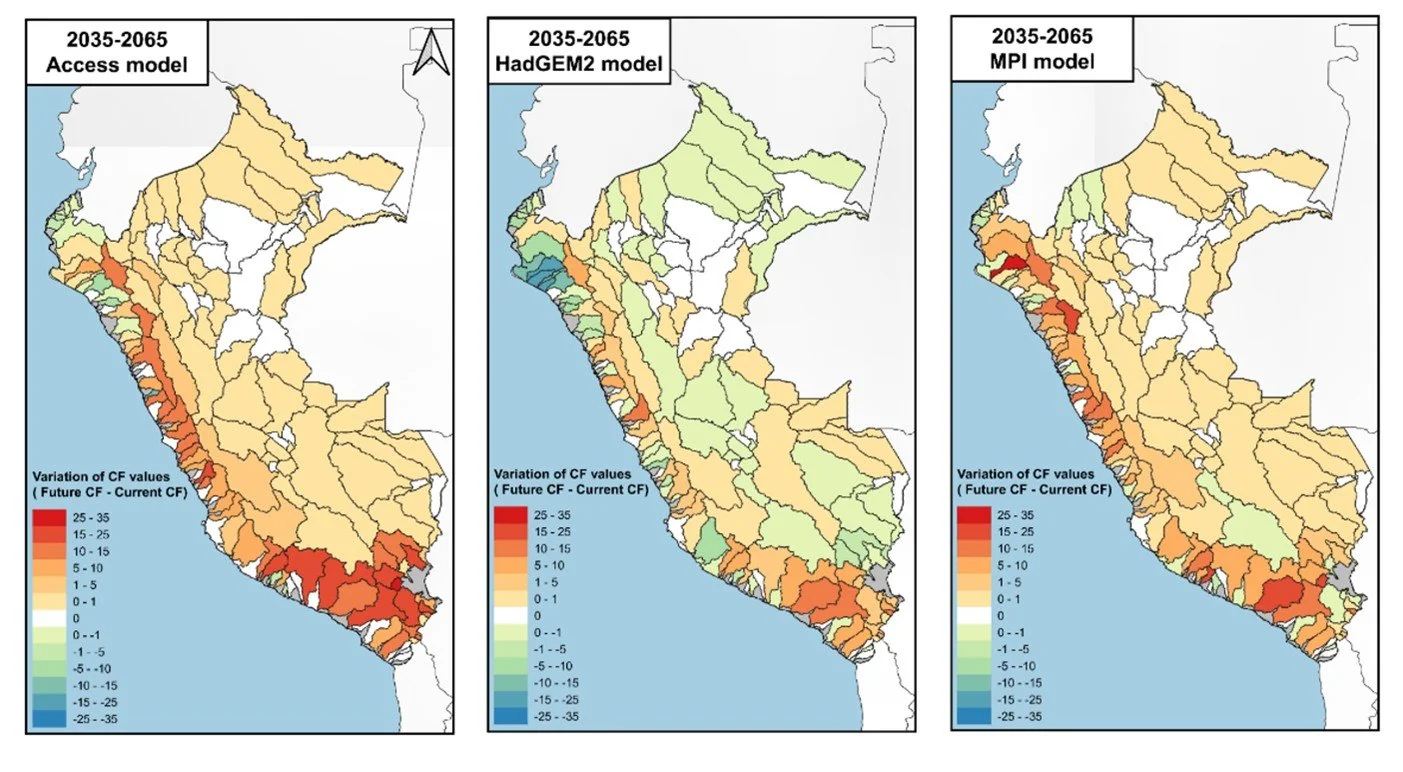
Figure 2. Variation of water scarcity in the Peruvian watersheds under climate change scenarios in the upcoming decades (Sanchez-Matos et al., 2024)
In this context, the National Water Authority (ANA, Autoridad Nacional del Agua) has implemented a certification scheme (Certificado Azul) to monitor the water footprint of products or services, promoting the responsible use of water resources. This certification is supported by water scarcity assessment methods such as Available Water Remaining (AWARE) (Boulay et al., 2018), but to date lacks the needed methodological particularities required to model water scarcity along the Peruvian coast, making the WF results unrealistic or highly uncertain.
Hence, our research addresses three critical scientific problems: 1) the misrepresentation of water scarcity in LCA and WF methods for Peruvian watersheds; 2) the absence of an approach to estimate future water scarcity impacts under climate change scenarios; and 3) the lack of information regarding realistic water scarcity conditions during El Niño events. For these objectives, the consensus method for water scarcity impact assessment (AWARE) was improved using national datasets at a watershed level, in order to recalculate the regionalized water scarcity characterization factors (CFs) for Peru.
Our results show that in some watersheds, water scarcity levels can be up to 34-fold higher than those calculated with global datasets (i.e., the original AWARE method). This fundamentally redefines water scarcity impact assessment for agricultural products, particularly as this implies that global approaches to measuring WF are recurrently underestimating the real environmental impact in these hyper-arid zones. Moreover, our findings reveal a significant paradox not considered in the current methods: while water availability increases during El Niño episodes in many Pacific watersheds throughout the northern Peruvian coast, water scarcity is not necessarily reduced, given the simultaneous damages to water supply infrastructure and land use, namely populated areas and agricultural crops. Regarding global warming scenarios, our results suggest that most available climate models converge to an increase in water scarcity in most watersheds along southern coastal Peru for the 2035-2065 period.
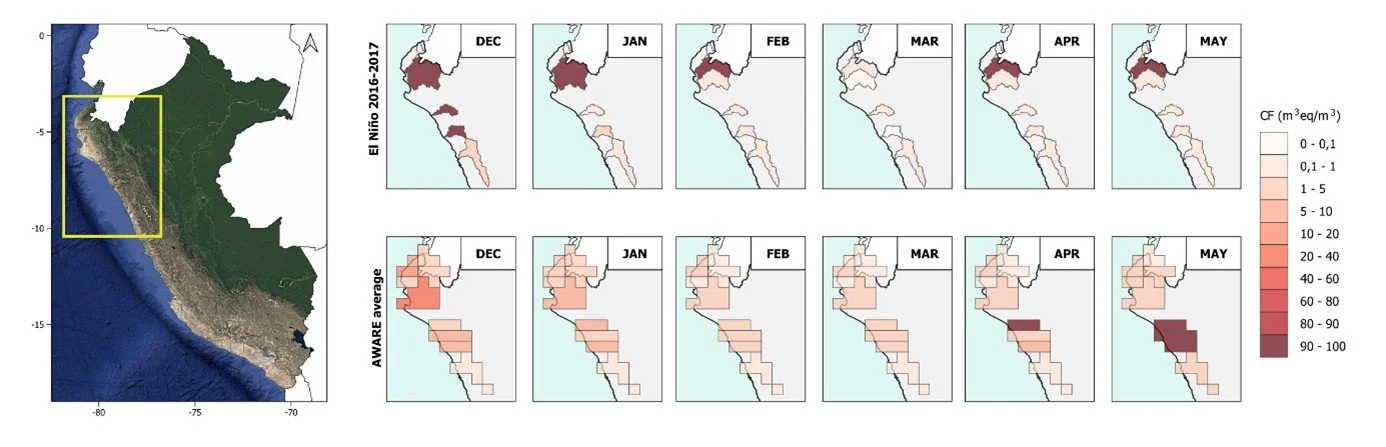
Figure 3. Comparative analysis of characterization factors (CF) for water scarcity between the AWARE method and those occurring under moderate or strong El Niño events (figure based on Sanchez-Matos et al., 2024)
El Niño events are common and recurrent along the Peruvian coast, bringing heavy rainfall in hyper-arid areas and compromising water management infrastructure. Hence, the higher water availability in El Niño periods currently generates a deceptive distortion (Fig 3), reducing the computed water scarcity, while the availability of these additional water resources is essentially unavailable to cover human demands and generates marginal ecosystemic effects. It is expected that climate change scenarios shown in Figure 2 will increase the severity of strong El Niño episodes and augment water scarcity heterogeneously across the country. Investment in modern and sophisticated water management systems is one of several policy actions that must be urgently undertaken in Peru to minimize the effects of these two climatic phenomena, and avoid situations such as those pictured in Figure 1.
Our study also proposes a strategy for moving beyond metrics to action. In the first instance, methodological regionalization and updating allow for the recalculation of CFs using national datasets, especially in arid and hyper-arid zones, where the models show high uncertainties. Secondly, our findings suggest that temporal refinement is needed to complement long-term averages with shorter temporal CFs (e.g., flooding and drought events). Finally, our results can be embedded into policy through certification schemes (e.g., “Certificado Azul”), aligning corporate accounting and strategies to save water with higher hydrological certainty. Furthermore, future climate change scenarios can be integrated into government policies aimed at addressing increased access to safe water for vulnerable populations, development of nature-based strategies and infrastructure for water storage and conservation of freshwater ecosystems, as well as planning for agricultural land use.
On the one hand, the short-term impact of our study lies in reducing the uncertainties in agricultural LCAs or WF assessments. In fact, when we recalculated water scarcity impacts for agricultural products using updated CFs, results shifted substantially, especially in the hyper-arid areas mentioned above, allowing for a fairer comparison of products, avoiding masking the actual water scarcity impact of certain agricultural products in highly water-scarce areas. On the other hand, in terms of scalability, the implications extend beyond Peruvian basins. Several countries rely on global models, which fail to capture the temporal and spatial variability of water scarcity. By demonstrating how nationally based data can drastically alter water scarcity metrics, our study offers a model for other nations seeking to refine their WF assessments.
The planetary boundaries approach seeks to define a safe operating space for humanity. However, translating global thresholds into viable local decisions remains a major challenge. Our contribution lies in implementing the freshwater boundaries approach at the watershed scale. This boundary is not exceeded uniformly; it is transgressed in local hotpots with a highly heterogeneous pattern not only across planetary regions or countries, but also at a regional or local level. By refining the AWARE model with high-resolution data and climate change scenario projections, we connect global planetary diagnoses with territorial management tools. Our findings suggest that water governance must shift from static models to adaptive frameworks that integrate hydrological science, infrastructure resilience, and ecosystem protection.
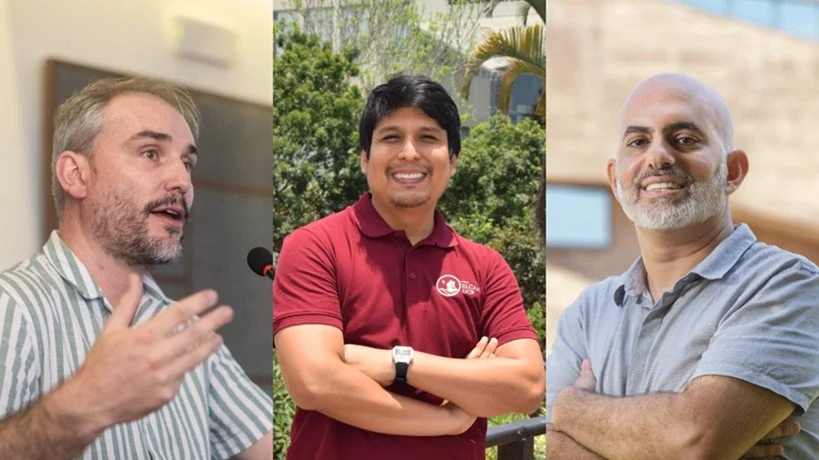
Figure 4. The research team. From left to right, Ian Vázquez-Rowe, Joan Sanchez-Matos, & Ramzy Kahhat.
REFERENCES
Boulay, A. M., Bare, J., Benini, L., Berger, M., Lathuillière, M. J., Manzardo, A., Margni, M., Motoshita, M., Núñez, M., Pastor, A. V., Ridoutt, B., Oki, T., Worbe, S., & Pfister, S. (2018). The WULCA consensus characterization model for water scarcity footprints: assessing impacts of water consumption based on available water remaining (AWARE). International Journal of Life Cycle Assessment, 23(2), 368–378. https://doi.org/10.1007/s11367-017-1333-8
Sanchez-Matos, J., Andrade, E. P., & Vázquez-Rowe, I. (2023). Revising regionalized water scarcity characterization factors for selected watersheds along the hyper-arid Peruvian coast using the AWARE method. International Journal of Life Cycle Assessment. https://doi.org/10.1007/s11367-023-02195-5
Sanchez-Matos, J., Vázquez-Rowe, I., & Kahhat, R. (2024). AWARE characterization factors in Peru encompassing El Niño and climate change events: does increased water availability guarantee less water scarcity? International Journal of Life Cycle Assessment, (Un 2023). https://doi.org/10.1007/s11367-024-02369-9
Vázquez-Rowe, I., Kahhat, R., & Lorenzo-Toja, Y. (2017). Natural disasters and climate change call for the urgent decentralization of urban water systems. Science of the Total Environment, 605–606, 246–250. https://doi.org/10.1016/j.scitotenv.2017.06.222