

COP30: Mobilizing Science for Planetary Impact
Science must evolve from describing the state of the planet to actively shaping the transition toward ecological stability. This discussion will explore how research can move beyond evidence and into agency – driving new incentives, influencing governance, and empowering societies to protect the systems that sustain life. It will underscore that advancing and elevating transformative science is essential for the future of the planet.
In collaboration with SwissNex: ‘Mobilizing science for planetary impact: from breakthroughs to transformations’
Moderator: Dr Gilbert De Gregorio (Associate Director, Frontiers Planet Prize)
Panelists:
Dr João Vitor Campos-Silva (Associate Researcher, National Institute for Amazonian Research, President of Instituto Jurua & 1st author, International Champion, UK)
Dr Fabiola Sosa Rodríguez (Head of research: economic growth and environment, Autonomous Metropolitan University & National Champion, 3rd edition, Mexico)
Dr Ane Alencar (Director of Science at the Instituto de Pesquisa Ambiental da Amazônia (IPAM))
Benjamin Bollmann, CEO of Swissnex in Brazil, opened the gathering by reflecting on the Planetary Embassy’s mission. Swissnex, a Swiss government agency, connects Switzerland with the world across education, research, innovation, and the arts. For this pavilion, Bollmann challenged conventional diplomacy: imagine a diplomatic table not just for nations, but for ecosystems as partners, not resources.
Dr De Gregorio welcomed the panel and set the direction of proceedings: award-winning research has the power not only to diagnose the problems on the planet but also to provide transformative solutions to restore us to a safe operating space. The Frontiers Planet Prize’s role in this is accelerating the timeline to scientific consensus so that breakthrough planetary solutions can be implemented and scaled up across all sectors.
Saving La Piedad Lagoon: Lessons for ecosystem protection
Construction of Wetlands in La Piedad Lagoon — Frontiers Planet Prize
Many cities face an imminent ‘Day Zero’, a critical point in water scarcity when an accessible, reliable freshwater supply runs out. Climate models predict that water availability in Mexico could decline by 30% between 2075 and 2099, while in the Mexico City Metropolitan Area (MCMA), home to 22 million people, the reduction could reach 40%.
Over the past 9 years, Dr Sosa-Rodríguez has been working with Metropolitan Autonomous University to restore La Piedad Lagoon, a 39-hectare body of water that serves as a critical water resource in the Mexico City Metropolitan Area (MCMA). Her team applies a hybrid strategy combining engineered wetlands, advanced filtration systems, and community-driven co-management. The project is implementing nature-based solutions for sustainable wastewater treatment, ecosystem restoration, biodiversity enhancement, and health-risk reduction.
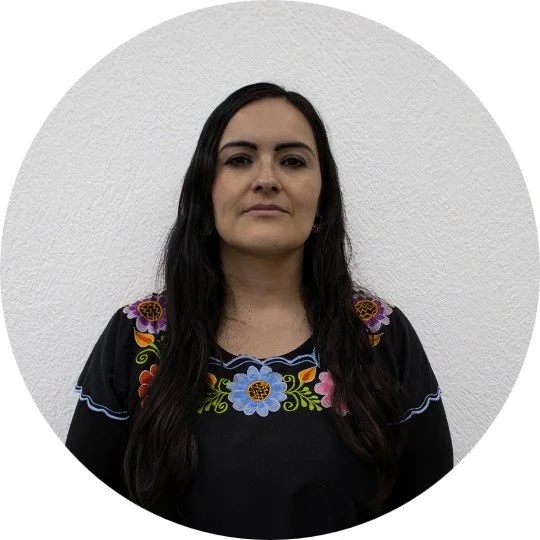
Dr Fabiola Sosa-Rodríguez
Head of research: economic growth and environment, Autonomous Metropolitan University & National Champion, 3rd edition, Mexico
“Decision makers should consider the universities and the research centers allies. We are not enemies. We can work together, and we can figure out the solutions together with the community.”
The project has trained over 900 students across 20 disciplines in restoring water bodies and sets out to build capacity for the community to take ownership of the project. In 2021, UAM helped establish a ‘comité de cuenca’ (river basin committee) composed of historically marginalized groups, including young people, women, and native communities, who, despite their livelihoods and well-being being closely intertwined with these territories, have had no voice in the governance process.
Beyond technical restoration, the initiative is influencing water policy at the national level. With the support of President Claudia Sheinbaum’s administration, the lagoon’s recovery is aligned with a broader agenda to rehabilitate the country’s most contaminated rivers. Sosa-Rodríguez and her collaborators are now working with government bodies to scale up their approach to other waterways.
Illuminating intercultural science for a brighter Amazonia
Reconciling Local Livelihoods and Tropical Biodiversity Conservation — Frontiers Planet Prize
Amazonia is defined by its biodiversity and ecosystem services, but a contribution that is often overlooked is its huge cultural diversity. For at least 12,000 years, traditional communities have inhabited this landscape, not as passive bystanders, but as active stewards, innovating social technologies to create new pathways for a thriving Amazonia.
Instituto Jurua, evolving from Campos-Silva’s partnership with local communities, is a non-profit organization built on exchange between conservationists and researchers, and community leaders and local associations. The institute supports collaboration for community-driven natural resource management by providing both financial backing and technical expertise, to ensure that locals can steward their resources and safeguard their territories.
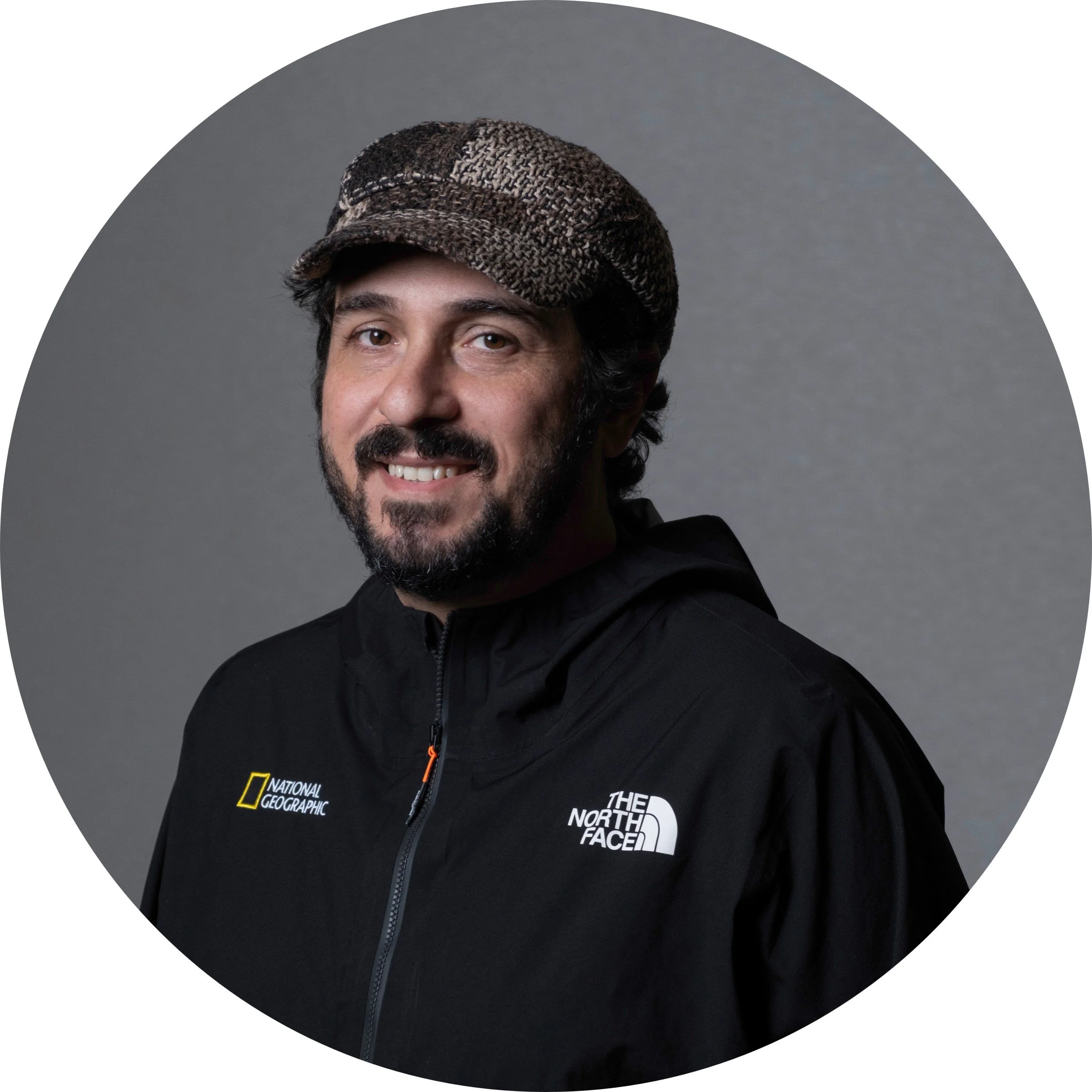
Dr João Vitor Campos-Silva
Associate Researcher, National Institute for Amazonian Research, President of Instituto Jurua & 1st author, International Champion, UK
“Many of the important technologies needed to ensure a positive coexistence with biodiversity and with the forest come from the hands and minds of traditional people.”
Today, thousands of people are committed to protecting this shared vision. Around 5,000 individuals safeguard 15 million hectares of floodplain and upland forest. One of the most powerful symbols of this work is the arapaima: once severely overfished, the species has experienced a 55-fold population recovery in protected lakes over the past 15 years.
The social gains have been equally profound. Fishing revenue is reinvested directly into the community, funding better education, healthcare, sanitation, communication, and access to electricity. As a result, only 5 % of people in these areas have concrete plans to move to the city, in contrast with nearly 60 % in other rural regions.
Campos-Silva emphasizes an urgent policy lesson: the costs of protecting this enormous territory fall heavily on local people. To sustain this system, credible reward mechanisms are needed because market forces alone are unlikely to shoulder the true social and economic value of forest guardianship.
Tracking Fires in Amazonia
Last year, the Amazon experienced one of the worst fire seasons on record, with 7 million hectares of standing forest burned, 11 times more than the annual deforestation rate. Three decades ago, the idea of tropical rainforest burning at all was controversial; today, the crisis is undeniable.
Dr Alencar offered a stark warning about the rising threat of fire in the Amazon. With three decades of experience, she’s seen how drought, fragmentation, and climate change are making the forest more flammable. Her work with MapBiomas Fire, IPAM’s (Amazon Environmental Research Institute) fire-monitoring initiative, tracks affected areas and delivers critical data on the scale, frequency and characteristics of these fires.
Alencar stresses that forest fires must be treated as a global priority. At COP, Brazil issued a call to action on forest fires, signed by the president and 50 other countries, yet the announcement drew little attention.
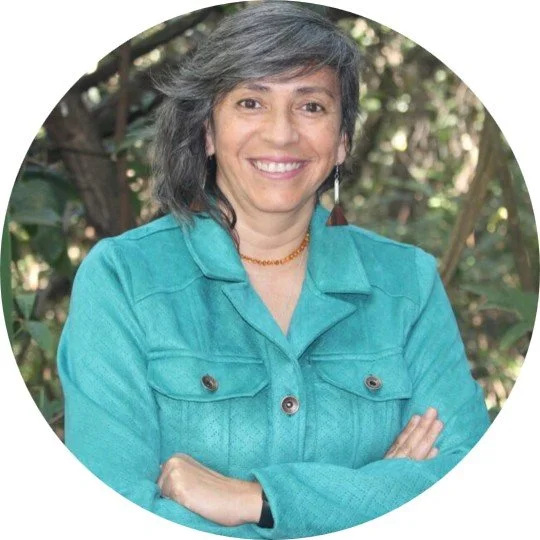
Dr Ane Alencar
Director of Science at the Instituto de Pesquisa Ambiental da Amazônia (IPAM)
“We have to channel the spirit of the mutirão, which is the spirit that there is no one single solution, and there's no one single person or institution that is going to be able to do something. We need everybody from the top to the ground to be able to actually change things.”
Forest fires are not only a massive source of carbon emissions; they also have severe consequences for local communities, who lose crops, income, and the forests they depend on. Alencar emphasizes that this is not about demonizing fire. Fire remains an essential tool for many traditional and rural communities. The challenge is governance: controlling and managing fires properly, at local and global levels.
Rethinking the role of scientists
A core message emerging from the discussion was the need to transcend disciplinary, institutional, and geographic boundaries. Addressing the accelerating pressures on planetary systems requires approaches rooted in collaboration with communities and designed to protect both ecosystems and the people most vulnerable to climate change.
The conversation turned to a fundamental question: How should we rethink the responsibilities of the scientific community? The traditional image of a researcher in a lab or conducting isolated fieldwork no longer reflects the demands of the moment.
All three speakers highlighted the power of knowledge exchange between researchers and local communities. Science has already generated extensive data, but what remains missing are the mechanisms that enable this knowledge to reach decision-makers and empower communities to defend their territories. This means recognising communities as part of the scientific enterprise itself, through co-authorship, co-creation, and shared ownership of knowledge.
Funding structures must therefore also be adapted. Co-production needs to be embedded as a core requirement in research proposals, ensuring that scientific initiatives are rooted in, and accountable to, the communities they aim to serve.
Sosa-Rodríguez emphasised that this rethinking extends to academic institutions themselves. She highlighted the work of UAM as an example of how universities can move beyond publishing to play a central role in implementation, transformation, and real-world impact.
Alencar added that open science is essential: the MapBiomas experience demonstrates the transformative power of open data. In a decade, more than 5,000 scientific papers have used the MapBiomas dataset, compared with 21 produced by the MapBiomas team itself, a clear demonstration of how open science accelerates innovation and impact. The COVID-19 pandemic, DeGregorio noted, showed what is possible when science and data are openly shared. The same level of openness is urgently needed for the climate and biodiversity crises.
This Swissnex Planetary Embassy event in Belém was more than a platform for dialogue; it was a call to action. The stories of lagoon restoration, forest stewardship, and fire science remind us that science is not just for reporting the symptoms of crisis; the role of the scientific community must evolve to address the planetary poly-crisis.