

Extractivism, Local and Indigenous Knowledge, and Justice: Rethinking the Energy Transition in the Andean Salt Flats

Andrea E Izquierdo
Instituto Multidisciplinario de Biologia Vegetal (IMBIV-CONICET), Argentina
Marina Mautner
Stockholm Environment Institute
Romina Díaz Gomez
Stockholm Environment Institute
Florencia Nieva
Universidad Nacional de Jujuy
Lucrecia Estigarribia
Universidad Nacional de Córdoba
Laura Forni
Stockholm Environment Institute
DOI: 10.25453/fpprize.32065149
Integrating local and Indigenous knowledge with Sustainable Development Goals in Lithium mining impact assessment for a fair energy transition. (Environmental Science & Policy, 2025)
“Current global frameworks often fail to capture the erosion of cultural heritage and knowledge systems as a key dimension of sustainability.”
The current global development model, driven by unsustainable consumption, has created many challenges that are simultaneously pushing environmental systems to their limits and deepening social inequalities. The foremost among these challenges is climate change, driven primarily by greenhouse gas emissions from a global economy still overwhelmingly dependent on fossil fuels. In response, the Paris Agreement—adopted in 2015 by United Nations member states—established an international commitment to limit global warming. Achieving these climate goals requires a profound decarbonization process, including a rapid transition from fossil fuels to renewable energy sources. However, although this energy transition is often framed as a “green” solution, it is not free of socio-environmental tensions. Increasingly, this transition raises urgent questions about justice, equity, and the uneven distribution of costs and benefits across regions and communities.
The Andean salt-flat region, located in the Northwest of Argentina, North of Chile and Southwest of Bolivia, has gained global recognition due to its high concentration of valuable lithium reserves, a critical component for the green energy transition. Together, these three countries hold approximately 60% of the world’s known lithium reserves, making this region an epicentre for the global battery supply chain. At the same time, this isolated and historically geopolitically marginalized region has been home to rural and Indigenous communities for millennia. These populations have developed sophisticated, place-based knowledge systems and sustainable ways of living in extreme environmental conditions while stewarding ecologically rich and environmentally sensitive landscapes. Yet today, their lands are increasingly targeted for lithium extraction to support a global transition they did not drive, and from which they may not equitably benefit.
Our study draws on surveys and interviews with 45 community members across 4 local and Indigenous communities in the Argentine High Andes to understand their perceptions and experiences of the impacts of lithium mining. Building on these findings, we conducted a literature review to inform the development of impact indicators that reflect these local realities. Finally, we conducted a policy analysis of the UN Sustainable Development Goals (SDGs) to assess how existing global indicators capture issues related to mineral rights and environmental impacts from extractive industries. This analysis revealed important gaps between global sustainability metrics and the environmental and social impacts identified by communities. This type of research, which integrates local perspectives while remaining globally relevant, is crucial to ensuring the energy transition avoids reproducing historical patterns of marginalization and environmental injustice.
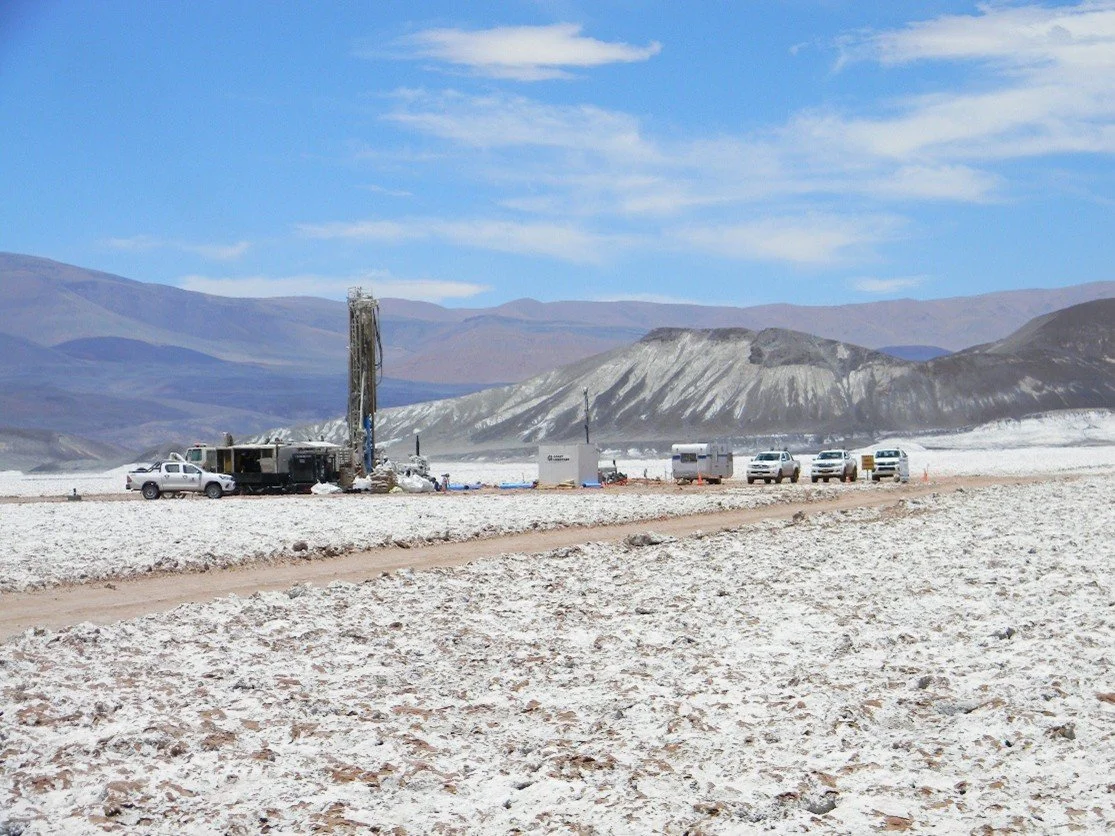
Figure 1: Lithium exploration well in a High Andean salt flat, with access roads carved through the salt crust.
While scientific literature has documented the numerous environmental impacts of lithium mining, identifying 15 distinct impacts spanning environmental, social, and economic dimensions, our research has shown that local and Indigenous communities possess a more holistic and relational understanding of these changes. Their knowledge systems connect ecological processes with social, cultural, and spiritual dimensions of life. Community members clearly describe how mining activities affect water availability, soil conditions, biodiversity, and, ultimately, their livelihoods and ways of life. The first step of the policy analysis was to develop a set of locally grounded indicators of environmental change, derived from community observations and experiences. These indicators provide valuable, context-specific insights that complement conventional scientific metrics.
When analyzed in relation to the SDGs, we found that these local indicators could contribute to all SDGs except SDG 14 (Marine life), which is not directly relevant to this inland region. Moreover, many local indicators simultaneously relate to multiple SDGs, reflecting the integrated nature of local knowledge. Our research also uncovered a critical gap: no local indicators associated with the loss of ancestral knowledge could be directly linked to existing SDG targets. This highlights a significant limitation in current global frameworks, which often fail to capture the erosion of cultural heritage and knowledge systems as a key dimension of sustainability.
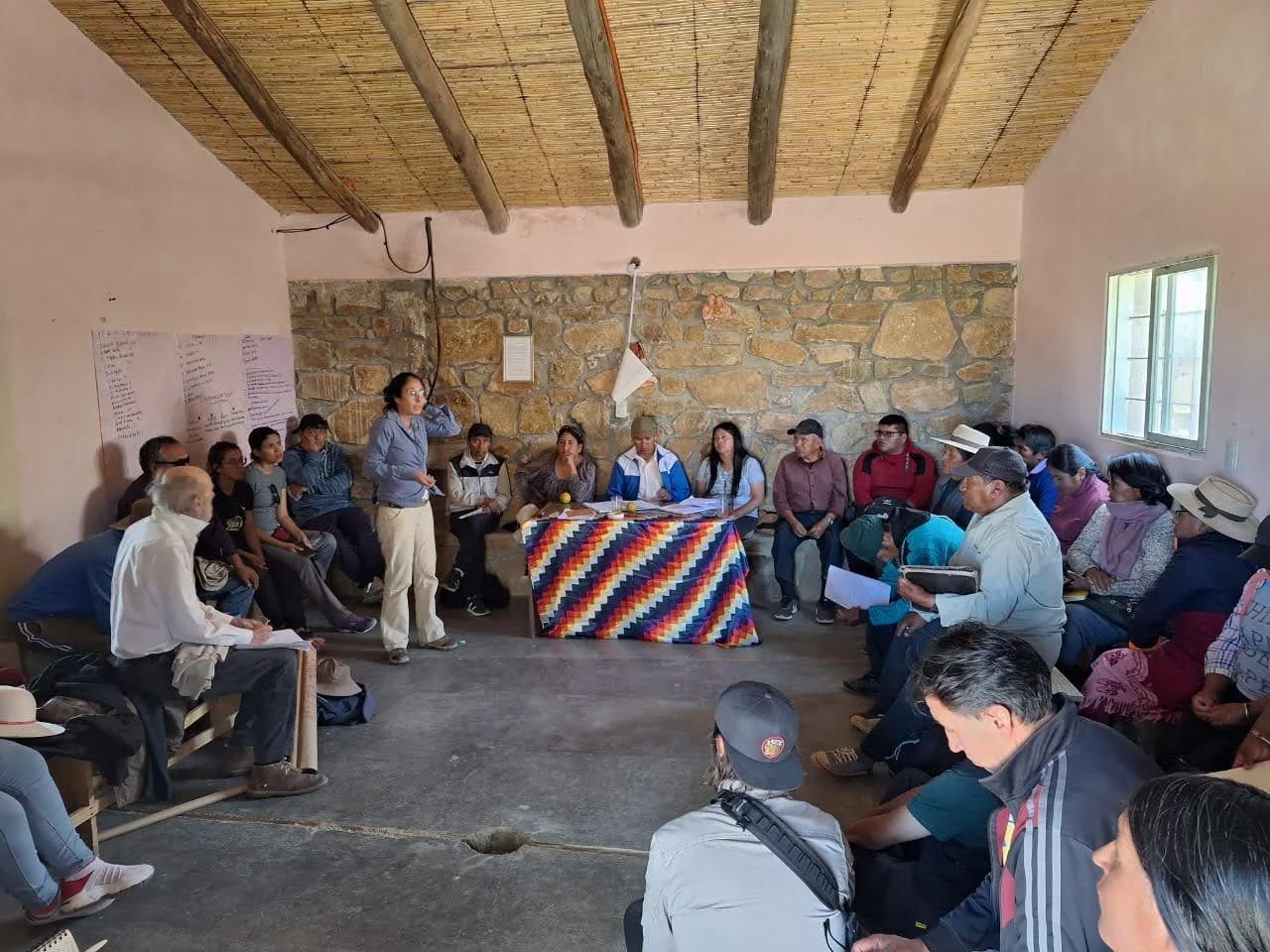
Figure 2: Authors/researchers presenting the study proposal to a Community Assembly
In response, our work proposes actionable solutions to bridge these gaps. First, we advocate for the systematic inclusion of local and Indigenous knowledge in environmental assessment and monitoring processes. This can be achieved by co-developing indicators with communities, ensuring that their perspectives are not only acknowledged but also actively shape decision-making. Second, we emphasize the need to strengthen consultation and participation mechanisms. Current processes are often insufficient, either in scope or implementation, to guarantee meaningful engagement. We propose more equitable, transparent, and culturally appropriate consultation frameworks that respect the rights of Indigenous Peoples and local communities. Third, our research supports the integration of these insights into policy and industry practices. By aligning local indicators with global sustainability frameworks, decision-makers can design more context-sensitive and socially just interventions. This approach also facilitates the scaling of solutions, as it provides a model for incorporating diverse knowledge systems into sustainability governance.
Our work has already begun to generate tangible impacts. Empirically, it documents for the first time in this region the perspectives of local and Indigenous voices about decisions that directly reshape their territories. Methodologically, it offers a replicable framework for documenting and incorporating community-based knowledge into sustainability assessments.

Figure 3. View of a salt flat from the corrales of a puesto in a High Andean wetland vega.
Beyond academia, we are actively contributing to policy discussions and public debates. Through policy briefs, technical reports, and direct engagement in local territories, we are promoting the recognition of Indigenous rights and the inclusion of local perspectives in mining governance. These efforts aim to influence national legislation and industry standards, ensuring that future development pathways are more inclusive and equitable. More broadly, our research advances planetary boundary science by emphasizing that environmental sustainability cannot be achieved without social justice. The concept of a “safe operating space” for humanity must include not only biophysical limits but also the rights, knowledge, and well-being of the communities most directly affected by global transitions. In the context of lithium extraction in the Andean salt flats, this means rethinking the energy transition as not only a technological shift but also a socio-political transformation. It requires moving beyond extractive mindsets toward more participatory, inclusive, and context-aware approaches.
Ultimately, our work calls for a redefinition of sustainability—one that recognizes the value of diverse knowledge systems and ensures that the transition to a low-carbon future does not come at the expense of those who have historically contributed least to global environmental crises. By integrating local and Indigenous knowledge into global frameworks, we can move closer to a truly just and sustainable pathway that respects both planetary boundaries and human dignity.
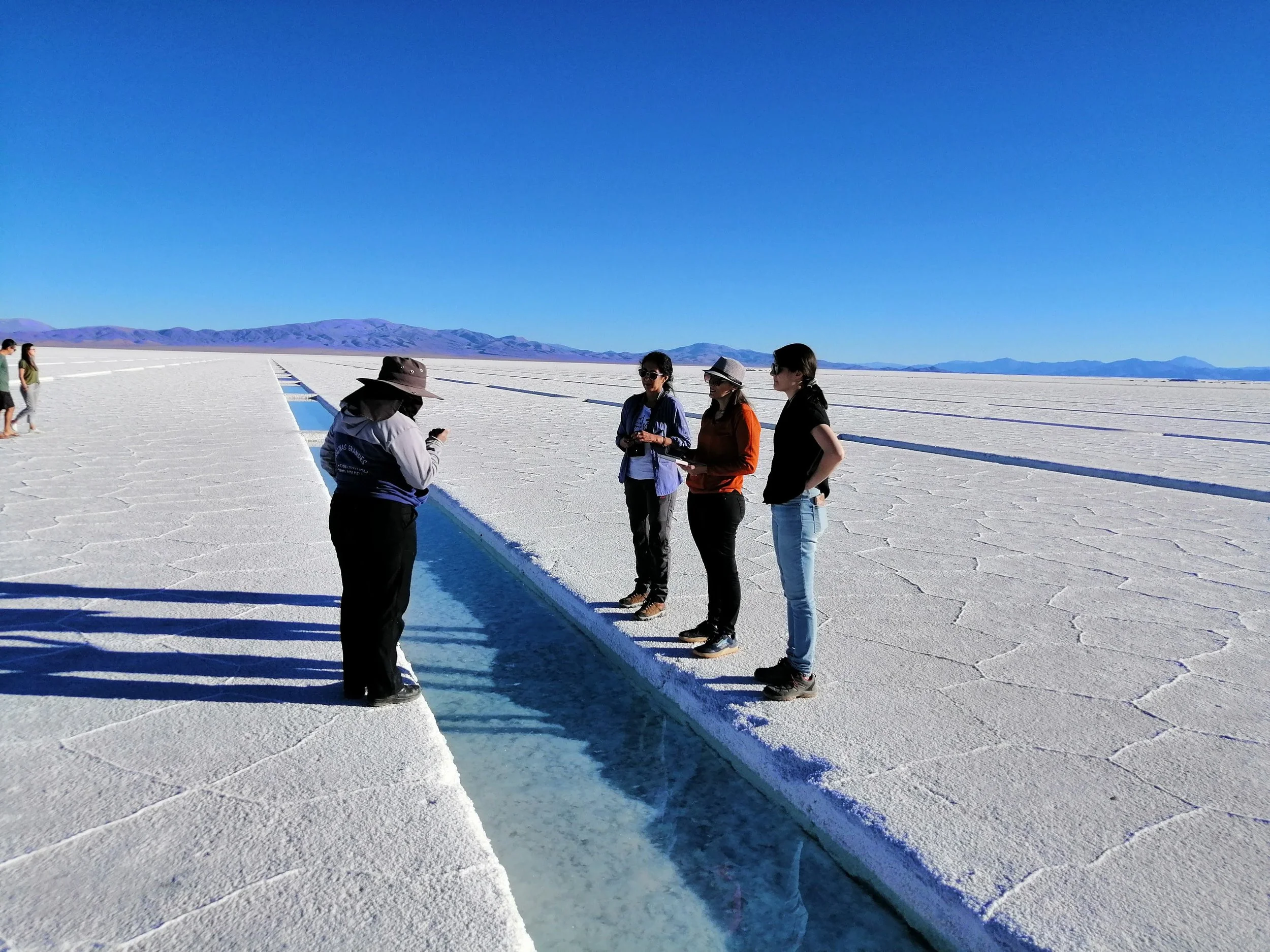
Figure 4. Researchers conducting field interviews.