

Modelling the net capture performance of leading carbon dioxide removal technologies

Ahmed Abdulla
Carleton University
DOI: 10.25453/fpprize.32065860
Integrating climate and physical constraints into assessments of net capture from direct air capture facilities (PNAS, 2024)
“Nations are not decarbonizing fast enough to stabilize climate. Our in-depth, global analyses of the performance of a main capture technology paint a picture of carbon removal’s role in our future.”
Nations are not decarbonizing fast enough to stabilize climate in line with the Paris Agreement. Thus, analysts and policymakers are increasingly betting on carbon dioxide removal (CDR) to reduce emissions over the next several decades. This diverse suite of technologies and strategies could tackle residual emissions from hard-to-abate sectors of the energy system, emissions from sectors like agriculture, or emissions that have accumulated in the atmosphere over decades. CDR could therefore help draw down carbon dioxide in the atmosphere and maintain Earth’s safe operation within the climate change planetary boundary.
One CDR option is direct air capture, an engineered technology that employs liquid solvents or solid sorbents to preferentially remove carbon dioxide molecules from the air, enabling this greenhouse gas to be compressed and permanently stored underground. Analysts and policy makers are exploring large-scale deployment of direct air capture in future energy systems, but assessments are being made based on assumptions about cost and performance, including carbon dioxide capture rates. These assumptions are informed by experiments and modelling, as well as pilot facilities.
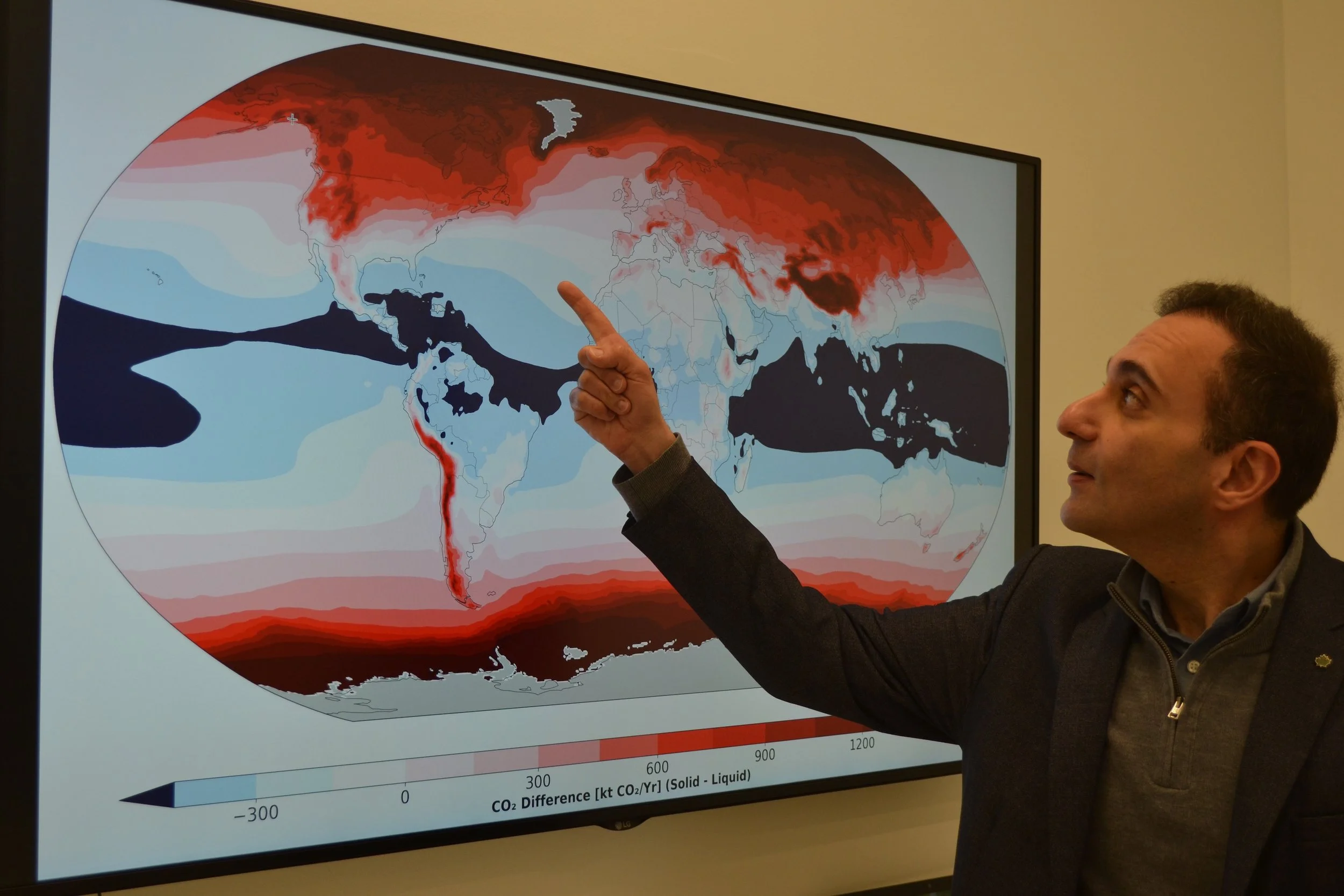
Figure 1. Prof Ahmed Abdullah with a map showing global variation in CO₂ capture performance between solid and liquid direct air capture systems.
Recognizing the risks associated with making such large bets on technologies that sit at relatively low levels of technical readiness, climate modelers implored policymakers and analysts in 2014 to resist “betting on negative emissions” because these technologies remain unproven at the large scales of deployment envisioned by integrated assessment models of the climate and energy system, which are on the order of ten billion tons of carbon removal per year in 2050 (the concerns raised in that document were specifically related to bioenergy with carbon capture, though they extend across CDR options) [1].
Instead of heeding this warning, the role that direct air capture is expected to play in net-zero futures has only expanded. For example, Canada’s long-term strategy submission to the United Nations Framework Convention on Climate Change, which explores pathways to achieving net-zero emissions by 2050, presents a range of scenarios, including some where the nation must capture up to 30% of its current emissions [2]. This alone would require a doubling of its energy generation to support carbon removals. While not a policy document, modelling exercises like Canada’s have proliferated globally, and many show that direct air capture both lowers the cost of achieving net-zero emissions and is necessary to stabilize the climate at the levels enshrined in global agreements like Paris.
While extensive research into direct air capture has been conducted, most of it does not analyze how it would perform in the real world, where locations experience different ambient environmental conditions and exist within varied energy systems. This research answers the question of how a key carbon removal technology—one of the most technically mature—would perform in the real world, and it does so globally and creatively by embedding a chemical engineering model into its environmental assessment. Patrick Shorey and I conduct an in-depth, global analysis of the technical and environmental performance of the main capture technology, the operation of which depends on air temperature, humidity, pressure, and CO2 concentration. Our research shows that performance is worse than assumed in countries that are developing and supporting this technology—including high-latitude nations like Canada—with capture rates in some locations being half of what earlier estimates promised. Its use also has serious implications for water and fugitive emissions. Our work provides the most spatially resolved, systematic representation of how carbon removal would perform across key planetary boundaries, including climate change and water stress.
Our research gives policymakers and investors three actionable insights. First, it tells them where to locate capture plants to maximize carbon removal. We estimate net carbon removal from siting a capture plant anywhere in the world, as well as how much energy and water are needed, the latter to replace operating losses. These findings advise policymakers worldwide on how prudent it would be to deploy this technology, including its impact on local energy and water systems. It also helps them calibrate estimates of carbon removal used in national mitigation strategies. Second, since some locations (cold + dry) underperform while others (hot + humid) outperform, our research supports efforts to strengthen the Paris Agreement’s Crediting Mechanism, as well as other carbon removal regulations. Countries that are interested in this technology but are poor candidates for deployment, like Canada, can work with those that are excellent candidates, like Brazil. Our work helps diplomats identify bilateral or multilateral links to accelerate negotiation and deployment. Third—both actionable and tangible—others can start using the model immediately because we made it open source. For example, we know that government experts in some nations, including Canada, are actively using our model and integrating it into broader assessments to improve policymaking on carbon removal.
Those who want a global carbon removal enterprise can use our results to ground expectations of the technology in realistic performance assessment and avoid misplaced confidence and sub-optimal investments. With rapid and deep cuts of emissions needed urgently, our study catalyzes evidence-based knowledge regarding carbon removal’s contribution to safeguarding our climate change planetary boundary.
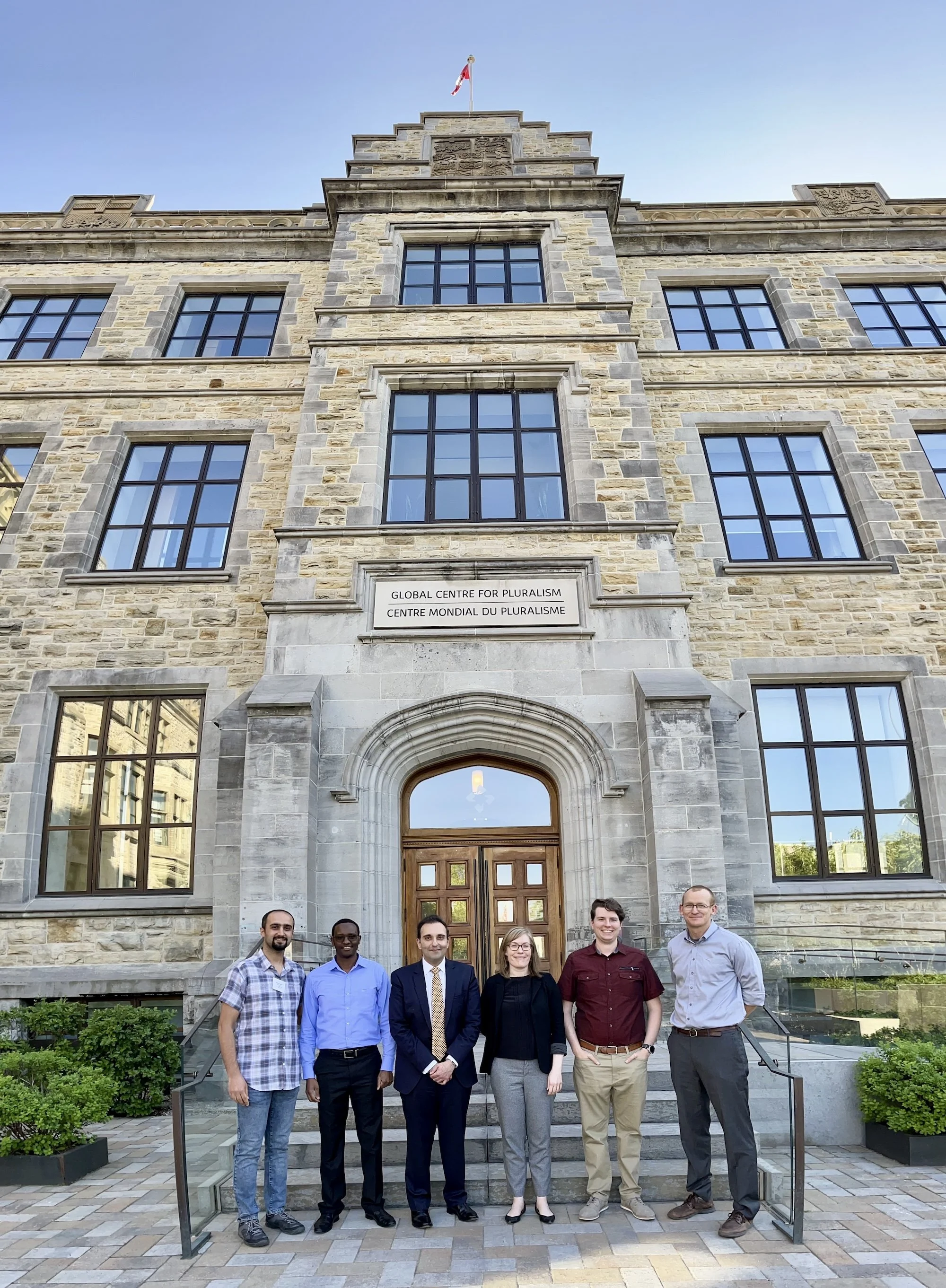
Figure 2. The research team.
References:
1. Fuss, S., Canadell, J., Peters, G. et al. Betting on negative emissions. Nature Clim Change 4, 850–853 (2014).
2. Environment and Climate Change Canada. Exploring Approaches for Canada’s Transition to Net-Zero Emissions – Canada’s Long-Term Strategy Submission to the United Nations Framework Convention on Climate Change (2023).