

Integrating Sufficiency in the EU Biomass Use and Trade to Restore Biosphere Integrity

Nicolas Roux
University of Natural Resources and Life Sciences Vienna
DOI: 10.25453/fpprize.32065845
Integrating sufficiency in the trade and biodiversity agenda of the European Union(One Earth, 2025)
“While tariffs are under intense negotiation, our article contributes a voice for using trade policy to shape a just future of trade within planetary boundaries.”
The planetary boundary for biosphere integrity is being breached by a quiet driver of ecological decline: the high extraction and consumption of biomass for food, feed, materials, and energy. In wealthy regions such as the EU, the high production and consumption of feed and animal products, combined with a push to replace fossil fuels with biomass-based alternatives, have accelerated this trend. The EU’s average biomass consumption is about 0.92 t C per capita per year (2015–2017), nearly three times what would be compatible with the planetary boundary for biosphere integrity, under current technologies. While efficiency—producing more with less—has long dominated policy and industry strategies, our research suggests that efficiency alone cannot close the gap, as it would require a nearly fourfold improvement, an implausible leap given historical trends. To return Earth’s systems to a safe operating space, wealthy regions must also embrace sufficiency: absolute limits and reductions in biomass extraction and use, implemented across provisioning systems—from production to consumption and trade—to ensure a fair share of nature’s capacity for all humans and all life on Earth.
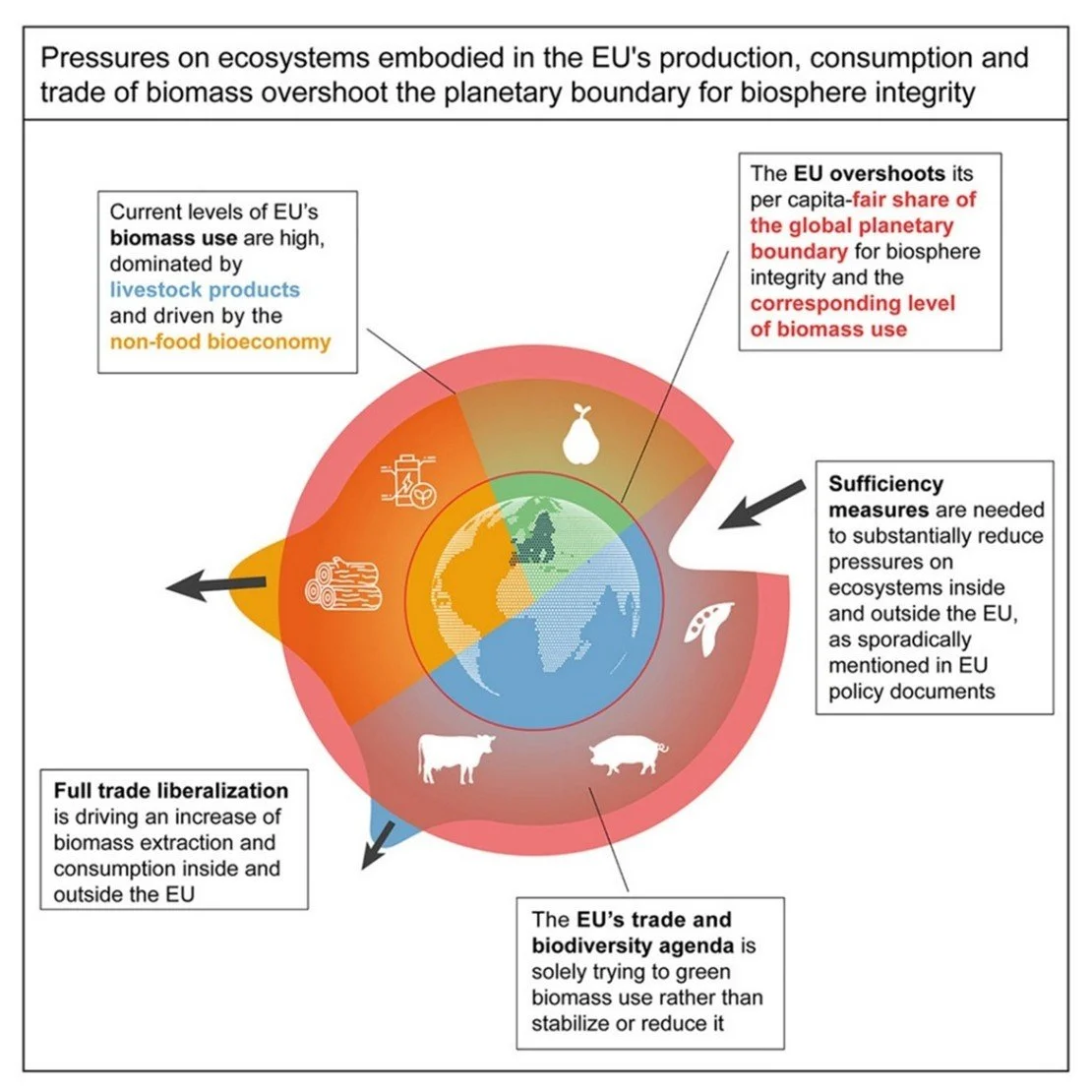
Figure 1:Pressures on ecosystems embodied in the EU’s production, consumption and trade of biomass overshoot the planetary boundary for biosphere integrity
What problem does our research address, and why does it matter now?
While rising population, incomes, dietary shifts, and biofuel policies have driven the surge in biomass production and consumption, our work spotlights an often-overlooked force: the scale effect of international trade liberalization. Beyond transferring technologies or relocating production, liberalization expands the total volume of production and consumption, intensifying pressures on ecosystems and biodiversity in the EU and globally. Lower tariffs and larger quotas on critical commodities such as feed crops, livestock products, wood, and bioenergy make it easier and cheaper to expand supply chains, not just reallocate them. The result is more land conversion and intensification—and hence biodiversity loss—both within the EU and in distal ecosystems beyond its borders.
Recent and proposed trade agreements, such as the EU-MERCOSUR Association Agreement, or the EU-Japan Economic Partnership Agreement, have removed or reduced barriers on imports and exports of feed, stimulants and animal products, thereby increasing their production and consumption in the EU and abroad. At the same time, high imports of rubber, ethanol, biodiesel (including palm oil), wood pellets, and roundwood have made the EU a major user of biomass for non-food purposes—adding pressure on ecosystems. These dynamics can undermine the EU’s own biodiversity goals, such as the Nature Restoration Law, by offsetting domestic gains with trade-driven pressures abroad and incentivizing more export-oriented production.
What actionable solutions do we propose, and how can they be implemented and scaled?
We argue for integrating sufficiency into EU trade and biomass policy. This means:
- Setting absolute limits on biomass extraction and use. In practice, this includes reducing meat production and consumption and capping bioenergy where it hampers nature restoration or displaces conservation, food, or higher-value material uses.
- Halting the elimination of tariffs or expansion of quotas on critical biomass commodities (feed crops, livestock products, wood, biofuels, and biomaterials) until quantitative limits for production and consumption are established. Over the longer term, raising tariffs or tightening quotas can serve as a second-best instrument to constrain scale if direct caps are not yet feasible.
- Embedding sufficiency in Sustainability Impact Assessments (SIAs) of trade agreements so they explicitly evaluate scale effects—not only practices and efficiency—and avoid locking in growth in biomass flows that make biodiversity targets unattainable.
- Enabling WTO-consistent pathways by using existing legal provisions (e.g., GATT Articles XXVIII, XX(b), and XX(g) and, where appropriate, SPS/TBT rules) and incorporating sufficiency-oriented non-tariff provisions, such as reducing subsidies that drive intensive livestock expansion.
- Ensuring equity and “leave no one behind.” We propose redistributing tariff revenues to producers in exporting countries, especially smallholders, potentially also through biodiversity programs. These should also be paired with assessments of impacts on smallholders, indigenous peoples, and local communities, and support for alternative income and just processes. Trade policies should also differentiate commodity contexts (e.g., large-scale cattle/soy vs. smallholder coffee/cocoa) and support jurisdictional approaches that protect rights and ecosystems.
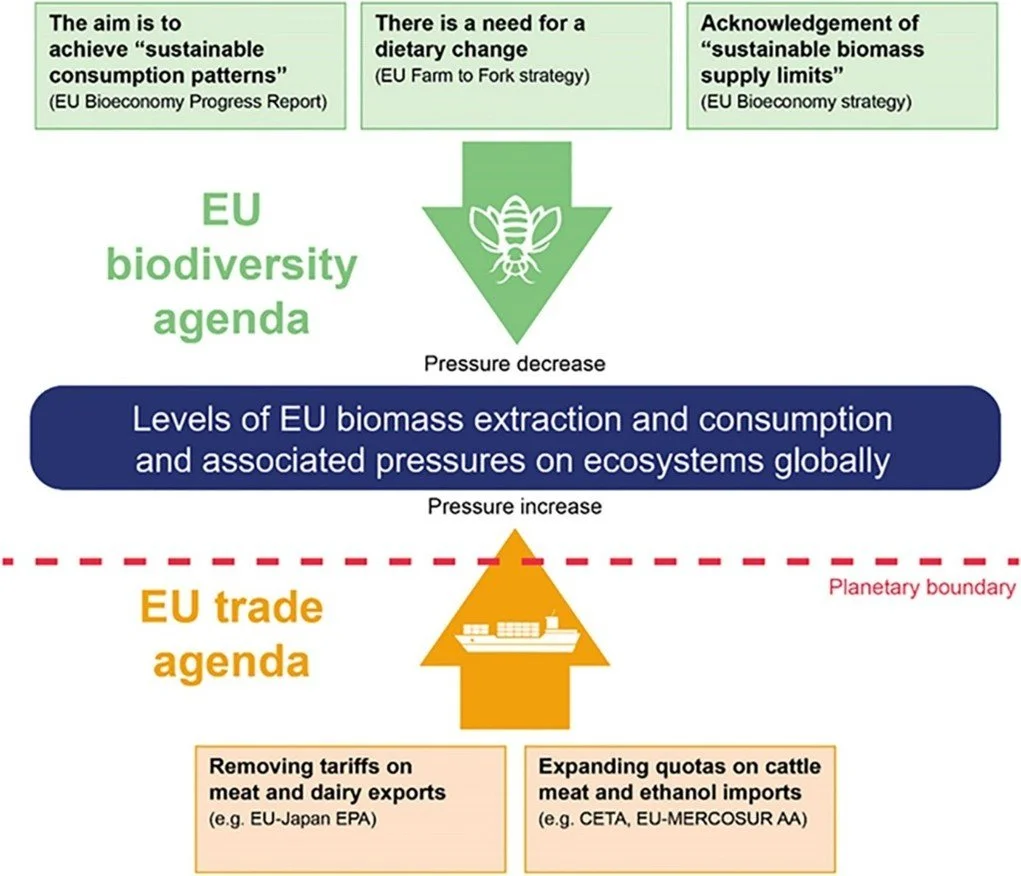
Figure 2. EU trade and biodiversity agenda impacts on levels of extraction, consumption and associated pressures on ecosystems globally
What impact has this research achieved, or is positioned to achieve at scale?
In a moment when tariffs and trade policy are being upended in service of or in reaction to nationalist and protectionist agendas, our research offers an alternative path: using trade policy to shape a just, science-based future within planetary boundaries. We argue for a sufficiency-oriented agenda that sets absolute limits on high-impact biomass flows, not to shield national preference, but to safeguard biodiversity and align production and consumption with Earth’s carrying capacity. By following a WTO-consistent, collaborative approach grounded in equity—transparent limits, robust assessments, and transition support—we can reduce total biomass throughput by reducing trade in critical commodities while promoting nature- and health-positive trade (e.g., fruits, vegetables, legumes, nuts). Although our analysis focused on biomass in the EU, the argument extends to other high-impact resources in affluent countries, overshooting their fair share of the planetary boundaries.
How does this work advance planetary boundary science and help return Earth to a safe operating space?
Planetary boundary science has quantified a global limit for biosphere integrity; our contribution is to link this limit to the socio-ecological flows of biomass. Specifically, we:
- Quantify the sufficiency gap by comparing current EU biomass consumption to boundary-consistent levels and showing why efficiency alone is implausible.
- Identify the scale effect of trade as a relevant pressure pathway and demonstrate why current policy tools underweight this effect.
- Translate the biosphere integrity boundary into policy levers through a legally informed, equity-centered roadmap that embeds biomass sufficiency into trade, avoids leakage, and supports just transitions.
- Integrate sufficiency thinking in provisioning system change across the supply chain—from production and processing to retail and trade—moving beyond the narrow framing of sufficiency as solely a demand-side measure.
In short, we link quantitative planetary boundary metrics to resource flows and actionable governance, enabling the EU and other affluent regions to align production, consumption, and trade with biodiversity strategies within the biosphere’s limits.
A path forward
The politics of sufficiency are challenging. Yet the stakes—stabilizing biodiversity, safeguarding climate, and protecting communities at the frontlines of extraction—demand courage and clarity. Trade need not be protectionist to be planet-positive: with transparent goals, science-based limits, equitable compensation, and collaboration across supply chains, we can reduce the throughput of high-impact biomass products while supporting livelihoods and promoting trade in goods that benefit human and planetary health.
Our call is simple: integrate sufficiency alongside efficiency in EU policy, with trade complementing domestic measures. Stop expanding market access for high-impact biomass products until science-based limits are in place. Align SIAs and biodiversity provisions with the scale of flows, not just their practices. Compensate and invest in just transitions for producers.
If we reorient production, consumption, and trade toward sufficiency, the EU can help lead the return to a safe level of biosphere integrity for people and nature.

Figure 3. The research team.