

Ecological and Evolutionary Consequences of Changing Seasonality

Daniel Hernández Carrasco
University of Canterbury
DOI: 10.25453/fpprize.32065923
Ecological and evolutionary consequences of changing seasonality (Science, 2025)
“Changes in the seasons are reshaping the natural world, affecting when species grow, migrate, reproduce, and interact.”
Humans have always had a close relationship with Earth's ecosystems and their natural rhythms. Our societies organized themselves around the predictable pulses of the seasons, developing calendars and traditions that allowed the use of seasonally available resources such as migratory animals, the optimal planting and harvesting of crops, and the storage needed for survival during unfavourable seasons. Today, we are altering those very seasonal rhythms in complex ways, shifting the timing, size, and predictability of annual environmental fluctuations. The destabilization of natural seasonal cycles, from earlier snowpack melt and seasonal river floods to more unpredictable algal blooms and rainy periods, is eroding the resilience of the biosphere and pushing it beyond planetary boundaries in previously overlooked ways.
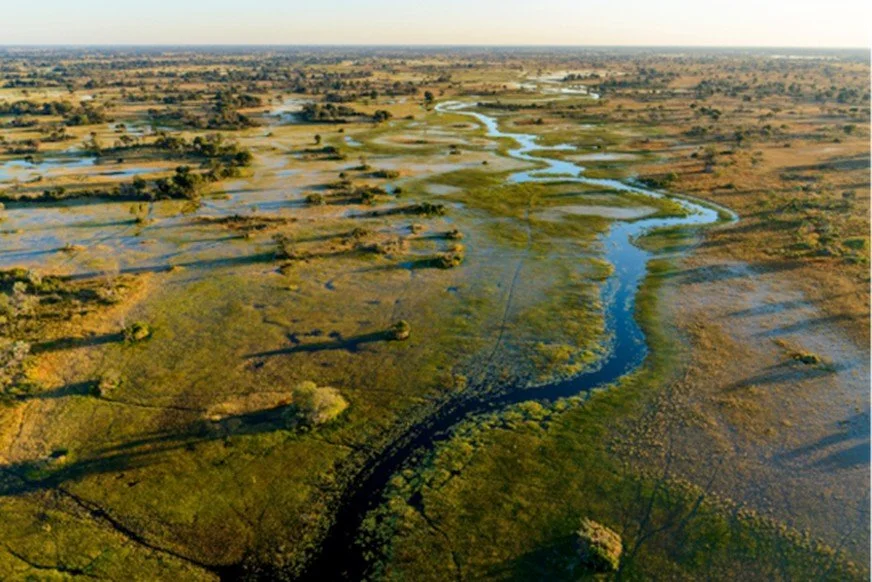
Figure 1. Seasonality sets the rhythm of life. The seasonal flooding of vast areas during Botswana’s low-rain season influences many ecological and evolutionary processes in the Okavango Delta, such as the timing of species’ life cycles, the turnover of biotic interactions, and animal movement patterns. These seasonal processes sustain highly diverse assemblages of species, which are key for the economy and food security of local human populations.
The ecological impacts of altered seasonality are, in part, mediated by species’ evolutionary histories that have taken place under specific seasonal regimes. Adaptations are widespread across the tree of life, including the use of internal clocks to time different life-cycle stages, and the reliance on environmental cues such as changes in daylight and temperature to decide when to sprout, reproduce, or migrate. These adaptations are integral to the dynamics of whole ecosystems. For instance, deciduous trees in temperate climates dramatically transform landscapes every year as they lose their leaves following seasonal changes in their environment, dictating large-scale cycling of matter and carbon, and generating further environmental changes in neighbouring ecosystems such as streams and lakes. Similarly, pollinators and flowering plants—including crop species—time and synchronize their activity with specific environmental conditions, providing a critical function that sustains natural and agricultural ecosystems. However, unlike human calendars, most species' ties to their seasonal environments are hardwired into their DNA, making them vulnerable to altered seasonal regimes.
Our research uncovered ways in which the impacts of altered seasonality—including changes to the magnitude, timing, and predictability of seasonal events—propagate from the genetic structure of single populations up to the performance of whole ecosystems, such as carbon sequestration. Importantly, it highlights critical links between altered components of seasonality and different biological attributes and adaptations that can be readily incorporated in models to anticipate ecological impacts. This is relevant moving forward because seasonality has been widely misrepresented in efforts to anticipate the impacts of climate change on biodiversity. Critical aspects of seasonal rhythms, including predictability and timing, have been overlooked, leading to ill-informed projections. For instance, without an appropriate account of seasonality, models would predict that wild varieties of tomato, wheat, soybean, and rice could expand to many areas around the world. Yet, we know that the adoption of such crops in regions outside of their native range required centuries of artificial selection to blur species' evolutionary ties to their historic seasonal regime. By ignoring such evolutionary constraints, current models risk overestimating the adaptive capacity of ecosystems to novel seasonal regimes, which we know have already arrived.
Beyond demonstrating the complexity of ecological responses, our research also establishes conditions under which species’ life cycles tend to evolve to be highly dependent on specific seasonal patterns. This new understanding helps generate expectations of the vulnerability of ecosystems to seasonal changes solely from comprehending their evolutionary history, with obvious benefits for conservation and restoration initiatives. We highlight that historically predictable seasonal regimes could be particularly at risk compared to regimes with similar but less predictable seasonal fluctuations, where risk-spreading adaptations are more common. In the Sonoran Desert, for example, many annual plants hedge their bets by delaying germination of a proportion of seeds to avoid complete recruitment failure in a bad year—an adaptation to seasonal but naturally unpredictable rainfall. Thus, while anticipating the fate of every individual species could be difficult, obtaining expectations of the vulnerability of the whole ecosystem to altered seasonality might be achievable thanks to the mechanistic links uncovered by our research. Quantification of these patterns through computational models and large-scale analyses is currently underway and will help identify regions where evolutionary history and ongoing climatic shifts are most dangerously out of sync.
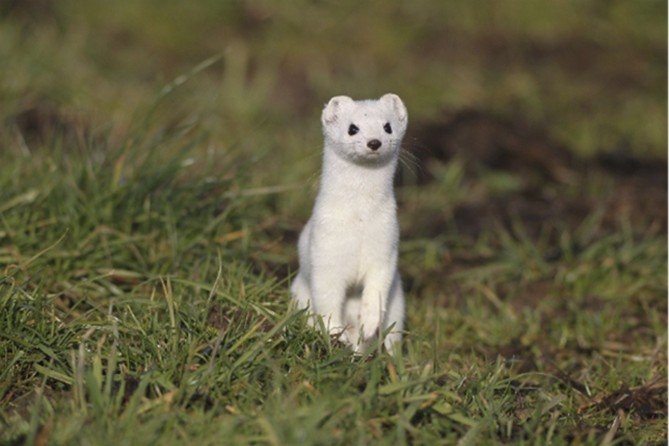
Figure 2. Northern populations of stoats (Mustela erminea) use daylight shifts as a cue to change color with the seasons. Earlier snowmelt now risks a critical camouflage mismatch.
Because seasonality acts as a fundamental driver of both ecological and evolutionary processes, understanding the cascading effects of its alteration is critical for managing planetary boundaries and the contributions nature makes to people. Our research demonstrates that seasonal fluctuations are not merely environmental noise; they maintain the genetic and taxonomic diversity and the temporal structure of food webs that stabilize large-scale ecosystem functions such as plant productivity and CO₂ exchange. In systems like rivers, where seasonal flow, nutrient, and sediment regimes are often abruptly altered by damming and water abstraction, management strategies that preserve seasonality are essential to sustaining biodiversity and natural biogeochemical cycles. For fisheries, where distinct seasonal adaptations of fish species and their prey pose a risk to the health of their populations under climate change, monitoring and anticipating timing mismatches to guide harvest limits could prevent sudden population crashes. Similarly, in conservation and restoration efforts, preserving or restoring natural seasonality can provide native species a competitive edge, particularly over generalist invaders that exploit disrupted regimes. It is therefore imperative to safeguard natural seasonality where possible and incorporate its nuanced dimensions into management practices—our research tells us how this can be achieved.