

Davos 2026: How the World’s Most Groundbreaking Science Can Accelerate Transformation
Moderator: Johan Rockström (Director, Potsdam Institute for Climate Impact Research, Frontiers Planet Prize, Chair of Jury of 100)
Frontiers Planet Prize International Champions 2025:
Arunima Malik (Professor, University of Sydney)
Zia Mehrabi (Director, Better Planet Laboratory)
Zahra Kalantari (Professor, KTH Royal Institute of Technology)
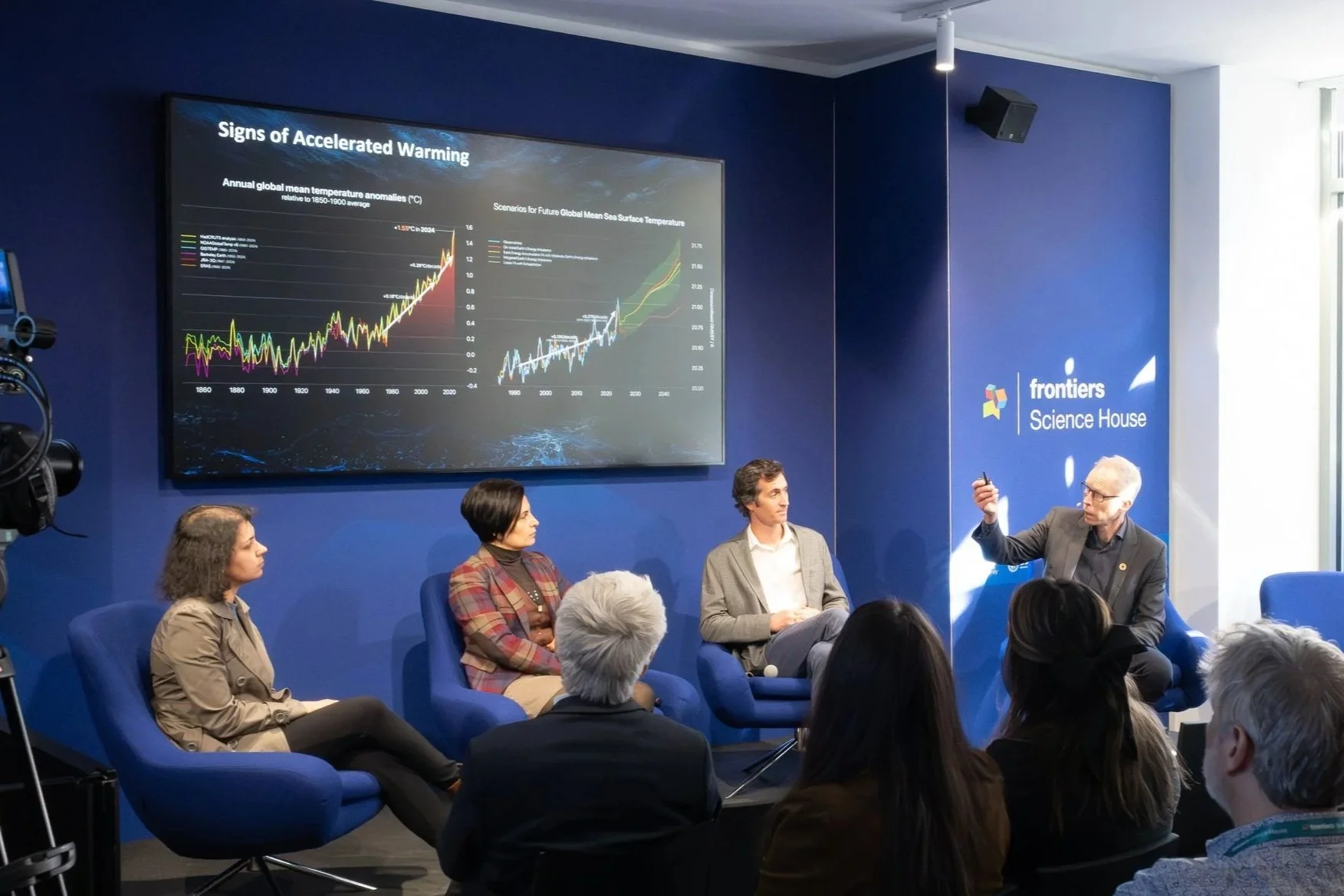
At the Frontiers Planet Prize panel in Davos, Professor Johan Rockström opened with a warning. The latest planetary boundary assessment, updated in 2025, shows seven of nine Earth system boundaries now breached. More troubling still, the planet's atmosphere and oceans are warming at an accelerating rate, even as greenhouse gas emissions begin to level off. This decoupling is particularly troubling: it suggests the planet itself is losing resilience, likely because multiple boundaries are being crossed simultaneously.
Rockström, director of the Potsdam Institute for Climate Impact Research and chair of the Frontiers Planet Prize jury, was unsparing about what the data shows. Global mean temperature has exceeded 1.5°C in a three-year running average, and Copernicus data released days before the panel indicated that a more permanent breach of that threshold is likely before 2030. The Amazon rainforest and tropical coral reef systems, the two most biodiverse ecosystems on Earth, are now considered close to tipping points, imperilled not by temperature alone but by the compounding effects of biodiversity loss, hydrological disruption, and nitrogen and phosphorus overloading.
The integrated planetary health assessment puts humanity firmly outside the safe operating space, with the transition window narrowing. The question the panel was convened to explore was not if, but how science is accelerating transformative solutions for the planet, with 3 case studies from the 3 international champions of our 3rd edition.
The food system is both the problem and the solution
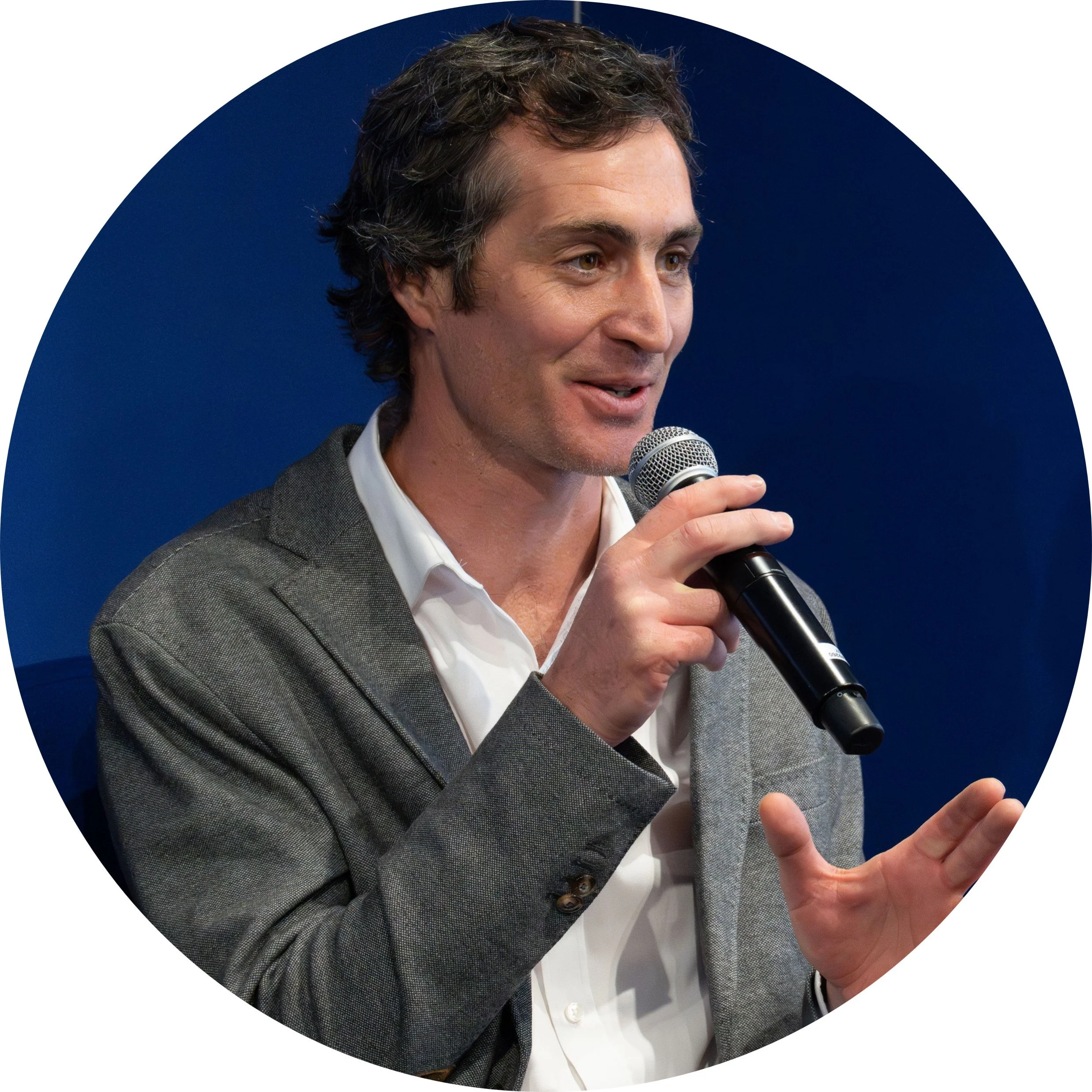
Zia Mehrabi, Assistant Professor at the University of Colorado Boulder and founder of the Better Planet Laboratory, introduced his study with striking statistics: agricultural systems are responsible for roughly a third of global greenhouse gas emissions and up to 90% of freshwater use. They are the single largest driver of biodiversity loss on the planet. Sixty to seventy years of agricultural policy built around simplification, uniform crops, synthetic inputs, mechanization, have delivered calories at scale, but at mounting ecological and social cost. The way we grow food, Mehrabi argued, is fundamentally misaligned with how nature works.
In nature, plants and animals are constantly interacting with each other. We see water cycling, temporal and spatial diversity, and complexity built into every level of these ecosystems, right down to the soil. His research, conducted with thousands of farmers across every inhabited continent, tested what happens when agriculture is deliberately designed to mimic natural ecosystems through diversification. These diversification practices include livestock introduction, crop rotation, compost application, and hedgerow planting. The results challenged a core assumption driving decades of agricultural policy: that diversification means lower yields. In fact, his team found no yield trade-off, and in many cases, actual yield gains, alongside significant improvements in biodiversity and food security. The more practices were combined, the greater the benefits.
Crucially, these solutions already exist on real farms in real landscapes. But with average farm sizes projected to double by 2100, compounding and accelerating ecological damage, Mehrabi is clear that investment must follow. With timely implementation, diversification practices can alter our trajectory towards agricultural systems which are better for both people and the planet.
Zia Mehrabi
Director, Better Planet Laboratory
3rd Edition International Champion, USA
Supply chains are hiding environmental costs
Arunima Malik, Professor at the University of Sydney, illustrated her work with a simple image: a cup of coffee in a Davos meeting room, and the trail of biodiversity impacts it leaves across an entirely different country. Global trade doesn't just transfer goods; it transfers social and environmental impacts, often masking who is truly driving the damage.
Her team developed twelve consumption-based indicators across 164 countries and more than 20,000 sectors, each linked to a sustainable development goal. The logic behind it facilitates a simple but consequential shift in perspective: rather than measuring how much CO₂ was emitted producing goods in a given country, the indicators capture how much CO₂ was emitted globally to satisfy that country's consumption demands. Tracing impacts this way reveals whether trade relationships are driving polarising or equalising outcomes over time — providing, in effect, a global monitoring framework for whether things are improving or worsening.
By identifying hotspots across supply chains, Malik reframes accountability onto the consumer, making visible what is usually too complex to unpick. Her work also provides the scientific and methodological foundation for scope 3 reporting, holding companies responsible for the full emissions footprint of their supply chains, not just their own operations. The team is already translating this into practice, running masterclasses in scope 3 assessment for business leaders and launching a Sustainable Business Hub at the University of Sydney to develop solutions for net-zero transitions. The ambition, as Malik frames it, is straightforward: broaden the indicator framework, measure spillover effects, and let the evidence drive just policy.

Arunima Malik
Professor, University of Sydney
3rd Edition International Champion, Australia
Zahra Kalantari, professor at KTH Royal Institute of Technology in Stockholm, opened with a before-and-after of an abandoned highway in 1920s New York. Left alone for a decade, it was reclaimed by nature. The city got shade, cooling and biodiversity for free. It was, she said, a glimpse of what urban nature-based solutions can deliver at scale.
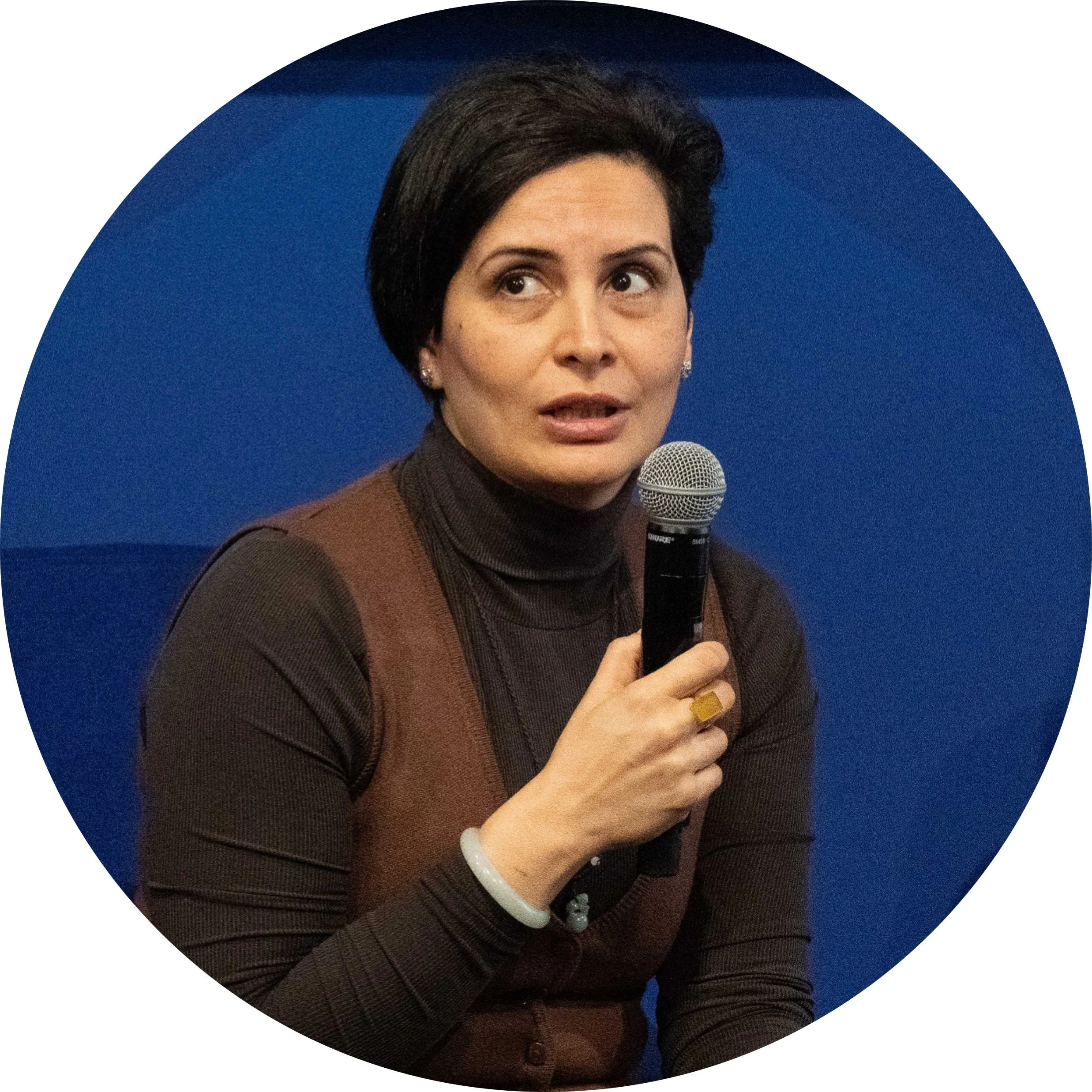
Her research set out to answer a deceptively practical question: how can cities use nature-based solutions to mitigate climate change? This meant tackling three things — which solutions are most effective, how to calculate their contribution to carbon neutrality, and crucially, where to place them for greatest impact. Modelling the strategic deployment of green infrastructure, including trees, wetlands, green roofs across 54 European cities, her team found that nature-based solutions can reduce urban emissions up to 63% when combined with complementary strategies, while also delivering co-benefits for public health, resilience and quality of life. The critical word throughout is strategic: where these solutions are placed determines whether they deliver maximum impact or minimum.
Kalantari is now working to co-design AI-assisted planning tools directly with cities, ensuring they are tools practitioners can understand and use day-to-day, not just academic outputs. She has secured funding to build a digital twin of Stockholm as a first step, with the ambition to scale the model globally, enabling cities worldwide to plan for both mitigation and adaptation together.
Zahra Kalantari
Professor, KTH Royal Institute of Technology
3rd Edition International Champion, Sweden
Science is ready. The rest must follow.
Across three very different disciplines, the same message emerged: the science is maturing, the solutions are demonstrable, and the challenge now is translation into policy, investment and scalable implementation. As Johan Rockström, chair of the prize jury, put it: everything we do must now add up at the planetary scale.
That three scientists could stand in Davos — where economic and political power converges — and present transformative, actionable research spanning food systems, global trade and urban planning is itself significant. Mehrabi, Malik and Kalantari are offering a map. The Frontiers Planet Prize exists to ensure that work of this calibre gets the visibility, credibility and momentum it deserves. The science has arrived at the table. Now the rest must catch up.
Read more about the Frontiers Planet Prize at Frontiers Science House 2026 here.