

The Invisible Giant: Addressing Aviation’s Hard-to-Abate Paradox
Manuel Soler Arnedo
Universidad Carlos III de Madrid
DOI: 10.25453/fpprize.32065887
Climate-optimized flight planning can effectively reduce the environmental footprint of aviation in Europe at low operational costs(Communications Earth & Environment, 2025)
“Selectively rerouting flights in high climate-sensitivity regions can significantly reduce impact at low cost and enable active mitigation before 2027.”
For decades, the global conversation on aviation and climate change has focused almost exclusively on carbon dioxide (CO₂). Yet, while the industry grapples with the long-term challenges of sustainable aviation fuels and hydrogen propulsion, a more immediate and arguably more significant climate driver has been largely overlooked: non-CO₂ effects.
As highlighted by the IPCC, non-CO₂ emissions—primarily contrail-cirrus and ozone formation—account for roughly two-thirds of aviation's net radiative forcing, albeit with large uncertainties. Despite this disproportionate impact, these effects have remained unaddressed in global climate policy, often deemed too complex or operationally expensive to mitigate. Aviation has thus been branded a "hard-to-abate" sector, caught in a deadlock between economic viability and environmental necessity.
My research addresses this critical gap. We have established that aviation’s non-CO₂ climate impacts are highly heterogeneous and dependent on specific meteorological conditions at the time and location of emissions. The core scientific insight is a non-linearity: the vast majority of climate forcing is caused by a very small fraction of flights operating in climate-sensitive regions. By failing to address these "hotspots," we are missing the single largest opportunity to stabilize the aviation sector's impact on our planet’s climate in the short-term.
An Operationally Feasible Solution: Scalable, Immediate, and Efficient
The challenge of climate-optimal flight planning has historically been viewed as a zero-sum game: reducing climate impact meant significantly increasing fuel burn and operational costs. Our research breaks this long-standing paradigm through a strategy we call "Smart Adoption”, an operationally feasible solution.
We developed a novel climate-optimization algorithm designed to identify and exploit climate-sensitive regions by re-routing aircraft not to fly through them. By analyzing a comprehensive, full-year dataset of European air traffic, we demonstrated that we do not need to overhaul the entire global fleet to see results. Instead, by selectively rerouting only the 5-10% of flights responsible for the vast majority of contrail impact, we can reduce the total climate footprint of the analyzed European flights by 12.5% to 21.3%.
Crucially, this mitigation is achieved at negligible operational costs, ranging from 0.2% to 2.0%. This is a transformative finding for industry and civil society. It proves that the "green renaissance" of the skies does not require an economic sacrifice.
The 24-Month Roadmap to Implementation: This solution is not a theoretical future; it is operationally ready. We envision a clear path to global scale within the next two years:
Policy Integration (Months 1-12): Our findings provide the technical foundation for the European Union’s non-CO₂ Monitoring, Reporting, and Verification (MRV) framework. It offers a validated methodology that can be adopted as a "climate-optimized routing" standard by Air Navigation Service Providers and Airlines.
Commercial Adaptation (Months 6-18): Through my engagement with flight-planning providers like FlightKeys and our university spin-off, AI-METHODS, we are integrating these optimization modules into the tools pilots and dispatchers use every day.
Global Deployment (Months 18-24): As airlines begin operational use, we can achieve immediate, measurable reductions in radiative forcing, turning scientific data into atmospheric cooling.
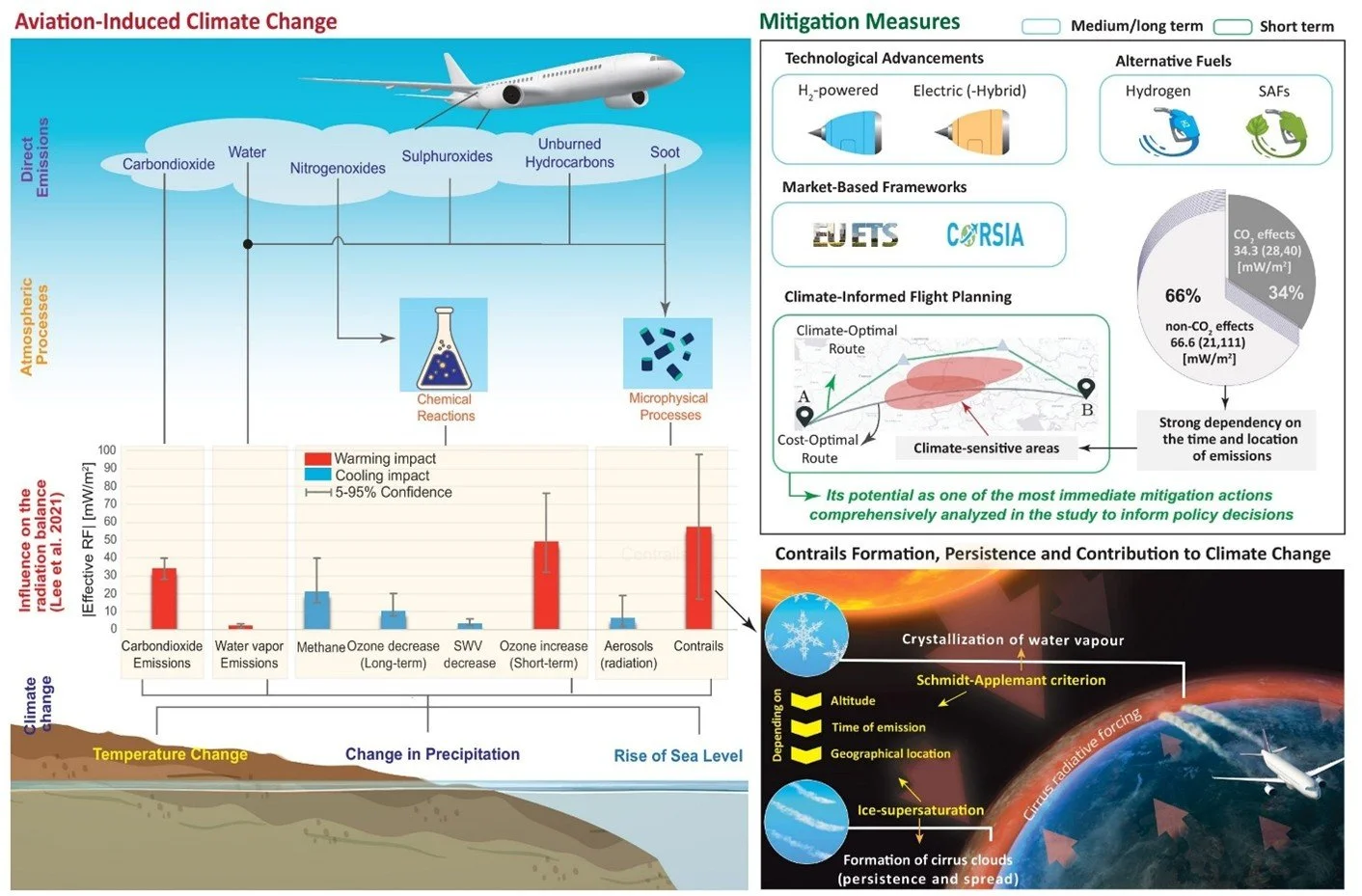
Figure 1. Infographic depicting aviation-induced climate change processes and mitigation measures.
Tangible Impact: From Scientific Validation to Actionable Policy
The impact of this research is already being felt across the European aerospace landscape. As the coordinator of major Horizon Europe projects like E-CONTRAIL and ALARM, I have worked to ensure that our "Smart Adoption" framework is not just published in high-impact journals like Communications Earth & Environment but is also translated into policy-oriented tools.
We have moved beyond diagnosis to provide a cure. Our research is directly informing the EU’s policy transition toward 2027, providing decision-makers with the evidence needed to mandate non-CO2 mitigation. Furthermore, the creation of the spin-off AI-METHODS serves as a dedicated vehicle for technology transfer, ensuring that these algorithms reach aviation stakeholders globally.
Beyond the numbers, our impact is measured in public awareness. By using creative media—including science-themed theater, comics, and policy briefs—we are making the complex science of contrail formation accessible to policy-makers, schools, and citizens. We are empowering the public to demand a more sustainable aviation industry, grounded in the reality that the tools for change already exist.
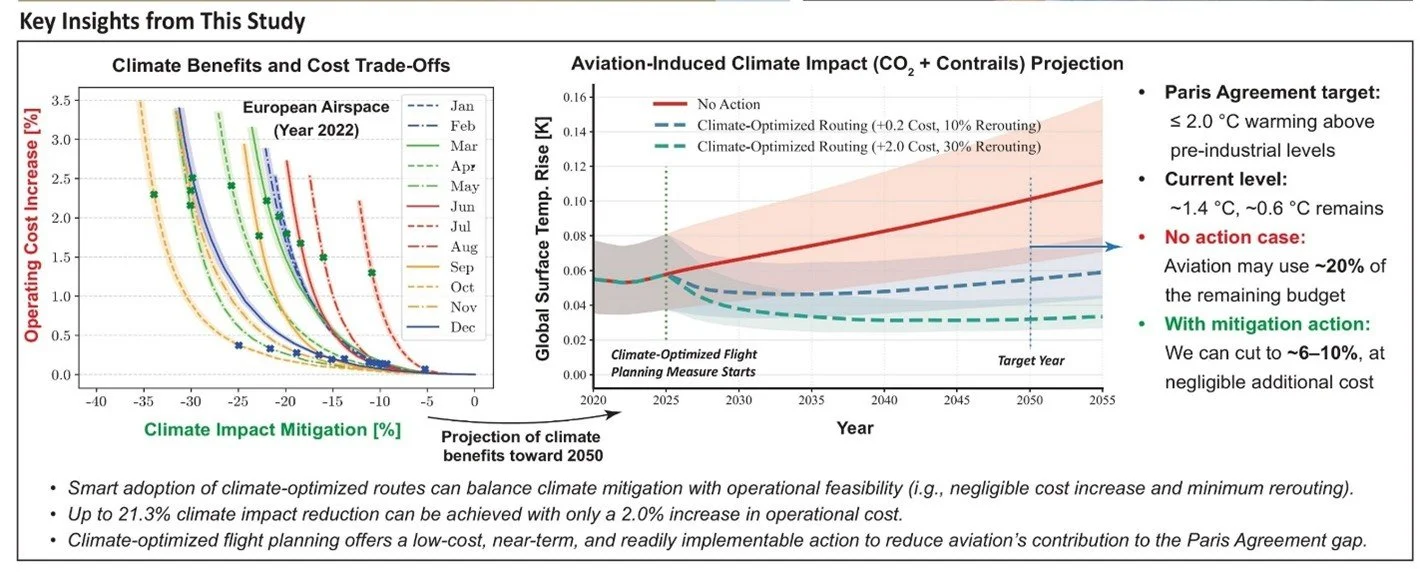
Figure 2: Key insights extracted from the winning research paper.
Advancing Planetary Boundary Science: Returning to a Safe Operating Space
The Planetary Boundaries framework defines the safe operating space for humanity. Our work contributes directly to stabilizing two of these critical boundaries: Climate Change and Atmospheric Aerosol Loading.
Aviation's non-CO₂ effects are a primary example of how human-induced aerosol loading and chemical changes in the upper troposphere, in this case the formation of contrails, exacerbate the climate crisis. By providing a method to avoid flying through climate-sensitive atmospheric regions, we are effectively reducing the sector's contribution to global warming without the "lag time" associated with removal.
Furthermore, our research tackles the inherent uncertainties in planetary boundary science. Future direction will be dedicated to continuing my research within the Aircraft Operations Lab at UC3M, focusing on disentangling non-CO₂ aviation-induced impacts on climate, trying to bridge some of the existing gaps, including the refinement of physics-based and data-driven models (using satellite and ground-based imagery) to reduce the uncertainties surrounding contrail and NOx impacts. This work is essential for perfecting the "Safe Operating Space" for aviation.
In conclusion, our research offers more than just a reduction in percentages; it offers a new way of thinking about the Earth system. It proves that through the "smart" application of optimal flight routes, we can decouple economic activity from environmental destruction. By returning aviation to its planetary limits, we ensure that the wonder of flight remains a part of our future, without costing us our planet.
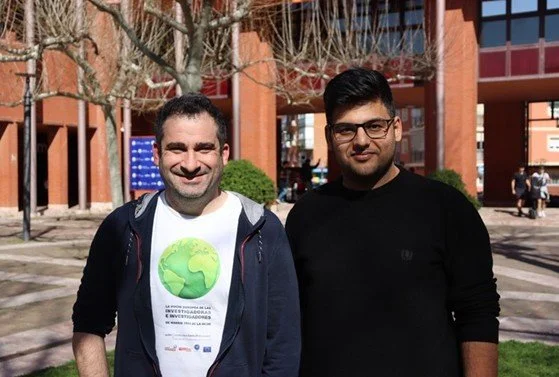
Figure 3. The research team: Manuel Soler Arnedo and Abolfazl Simorgh.