

The Frontiers Planet Prize at Zurich Climate Week 2026: Co-Creating the Future of the Bioeconomy
On a mission to connect Switzerland, Brazil, and the world in science, education, innovation and the arts, SwissNex in Brazil, in collaboration with Frontiers Planet Prize and Climate Week Zurich, created ‘From Zurich to Amazonia: Co-Creating the Future of the Bioeconomy.’
Set against the backdrop of one of Europe’s largest climate innovation gatherings, the session unfolded within a city-wide effort to rethink how climate action is designed, scaled and implemented. Climate Week Zurich, in its inaugural year, brings together business leaders, policymakers, researchers, creatives and innovators from across sectors to accelerate practical solutions for mitigation, adaptation and resilience. Across more than 250 events spanning the city, the week transformed Zurich into a living laboratory for climate action, connecting global expertise with local implementation.
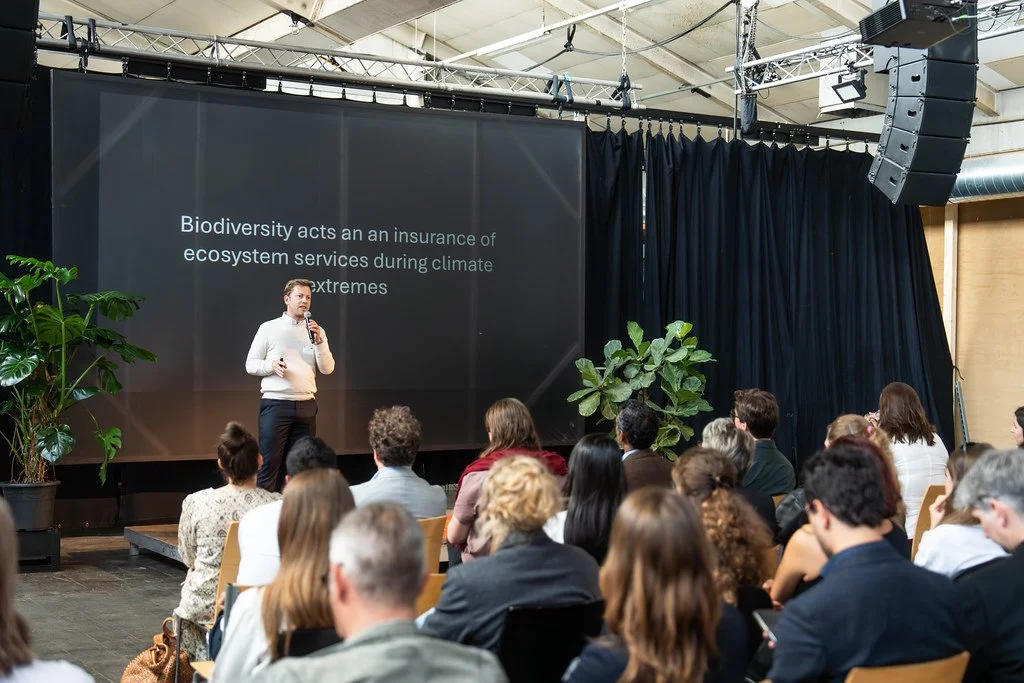
Five thousand miles apart, two of the world’s most remarkable innovation ecosystems share a common purpose. Switzerland and Amazonia are each, in their own way, generating the solutions to the planetary crisis. At Climate Week Zurich, these two ecosystems were woven into a single conversation.
The session brought together innovators from all sectors; researchers, traditional communities, companies and institutions collaborating to reshape our relationship with nature. The session discarded the rigid lens through which bioeconomy, biodiversity and climate solutions are often viewed, in pursuit of ‘silver bullets,’ and reframed these issues as questions of resilience and balance for long-term strategies. By connecting Amazonian realities with global scientific research, the conversation opened space for solutions that are as comprehensive as they are genuinely innovative.
The session opened with Swiss research, grounding proceedings in the reality of climate variability and extreme events. Dirk Nikolaus Karger of the Swiss Federal Research Institute (WSL) presented his work on global megadroughts as silent destabilisers of Earth's life support systems, making the case that preserving biodiversity is not just an environmental imperative but an insurance policy against climate change itself. Karger is a key contributor to the Frontiers Planet Prize-winning paper ‘Global Increase in the Occurrence and Impact of Multi-Year Droughts,’ nominated through the International Science Council, and led by 4th Edition National Champion for Switzerland Liangzhi Chen (Swiss Federal Research Institute, WSL).
Megadroughts as Destabilisers of Earth’s Life-Support Systems
Set against a sweeping visualisation of decades of climate extremes mapped onto a spinning globe, Karger walked through how high spatial resolution climate modelling has allowed his team to track droughts not just by intensity, but across space and time. With temperatures rising, the atmosphere is becoming increasingly unstable. For every degree of warming, the atmosphere can hold up to seven percent more water, shifting precipitation patterns toward greater extremes: more intense rainfall in some places, more persistent droughts in others.
The focus of the research is on water scarcity events that persist across multiple years: megadroughts. As the years rolled by on screen and the timeline pushed into the future, the clusters of red grew more frequent and more persistent. The total area now affected by megadroughts globally has grown by roughly the size of Switzerland. Among the ten most severe drought events on record, durations stretch to twelve years, and one has been ongoing in the Amazon for at least eight. Extreme events, it was clear, are no longer exceptional. They are showing up everywhere, and they are increasing.
Karger’s research moves beyond simply identifying and mapping megadroughts. It also captures the feedback loop between climate change, land use change and ecosystem resilience: rising temperatures intensify drought, drought weakens ecosystems, and weakened ecosystems absorb less carbon, further accelerating climate change. By integrating climate modelling with impact modelling, the researchers examined how adaptation pathways, particularly shifts in agriculture and energy infrastructure, reshape land use and, in turn, affect biodiversity, still the leading driver of species loss globally.
As climate change worsens, societies will require more land-intensive adaptation strategies, increasing pressure on ecosystems and making the search for balance ever more urgent. The sobering conclusion is that, even with adaptation, species loss continues. However, it is at a reduced rate compared to a world without intervention.
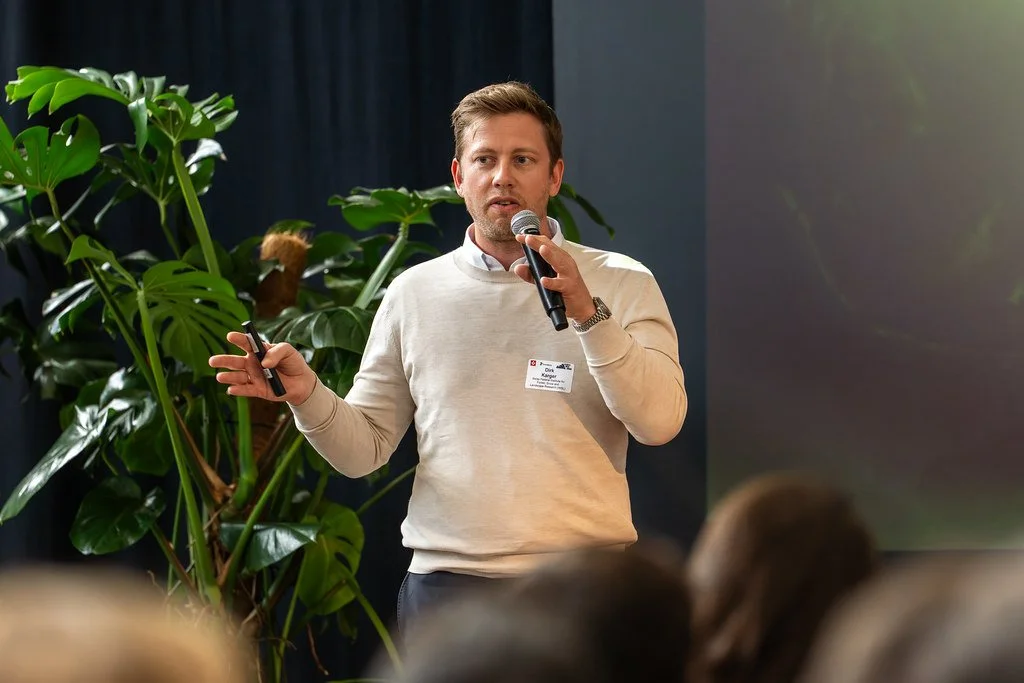
Karger posed the hypothetical: Why does preserving a few hundred more species matter in the face of unavoidable biodiversity loss? The answer brought his findings directly back to the core themes of the session itself: resilience and balance. Biodiversity is not a passive casualty of climate change, but one of the foundations of long-term planetary resilience. Ecosystem services such as carbon storage, clean water and food production all depend on it, and highly biodiverse ecosystems are far better equipped to withstand climate extremes. During drought, for example, a biodiverse forest is more likely to continue absorbing carbon, while a degraded ecosystem may instead become a source of emissions through wildfire or collapse. The more species an ecosystem contains, the more stable it becomes under pressure. In this sense, biodiversity functions as a form of planetary insurance: a safeguard for the systems that sustain human and ecological life alike.
Karger’s work ultimately reinforced the wider message emerging from Zurich to Amazonia: that meaningful climate solutions cannot focus on mitigation, adaptation or economic transformation in isolation, but must instead recognise the deep interdependence between climate, biodiversity and the resilience of communities and ecosystems worldwide.
For a more in-depth look at the winning research, read Liangzhi Chen’s thought piece: Global multiyear droughts: a silent destabiliser of Earth’s life-support systems.
All images courtesy of SwissNex in Brazil.