

Our Global Network Mobilised: The Fourth Edition in Focus
The Frontiers Planet Prize has entered its fourth edition with great momentum, a sign not only of the growing global urgency around planetary stability, but of the scientific community’s readiness to deliver actionable solutions at scale. What began as a bold initiative for planetary science has expanded into the world’s largest prize in scientific solutions for planetary health.
In just three years, the prize has extended its reach across continents, strengthened partnerships with leading universities and research networks, and accelerated high-impact scientific work to drive real-world systems transformation. With the 4th edition now in the Jury evaluation phase, the numbers tell a story of scale and accelerating impact.
The 4th edition opened alongside the Potsdam Institute for Climate Impact Research’s 2025 Planetary Health Check, which reveals that seven of the nine planetary boundaries have now been crossed. These stark findings bring the mission of the Frontiers Planet Prize into sharp focus: to activate scientific excellence now, while we still have an opportunity to act before irreversible tipping points are reached. This mobilization takes shape through visibility, funding, collaboration, and shared commitment to restoring humanity’s place within our planet’s limits.
“We know we need solutions that enable us to become stewards of the entire planet. The creation of a world-leading prize that supports science taking a truly holistic view, integrating people and Earth systems at the planetary scale, is unique. Equally distinctive is its focus on science itself: celebrating science, investing in science, and doing so at a scale that matters. Awarding three, million-dollar prizes represents a major commitment and offers critical support for the frontier of our ability to navigate the future, at a moment when caring for the planet in its entirety is essential. The Frontiers Planet Prize is a pioneer in terms of being right at the frontier of the science that the world needs right now.” - Johan Rockstrom, Director, Potsdam Institute for Climate Impact Research
Below, we share the latest data and roadmap shaping the 2025-2026 cycle: who is participating, what we have achieved, and how the prize is evolving to meet a decisive decade for planetary health.
Our Nomination Community
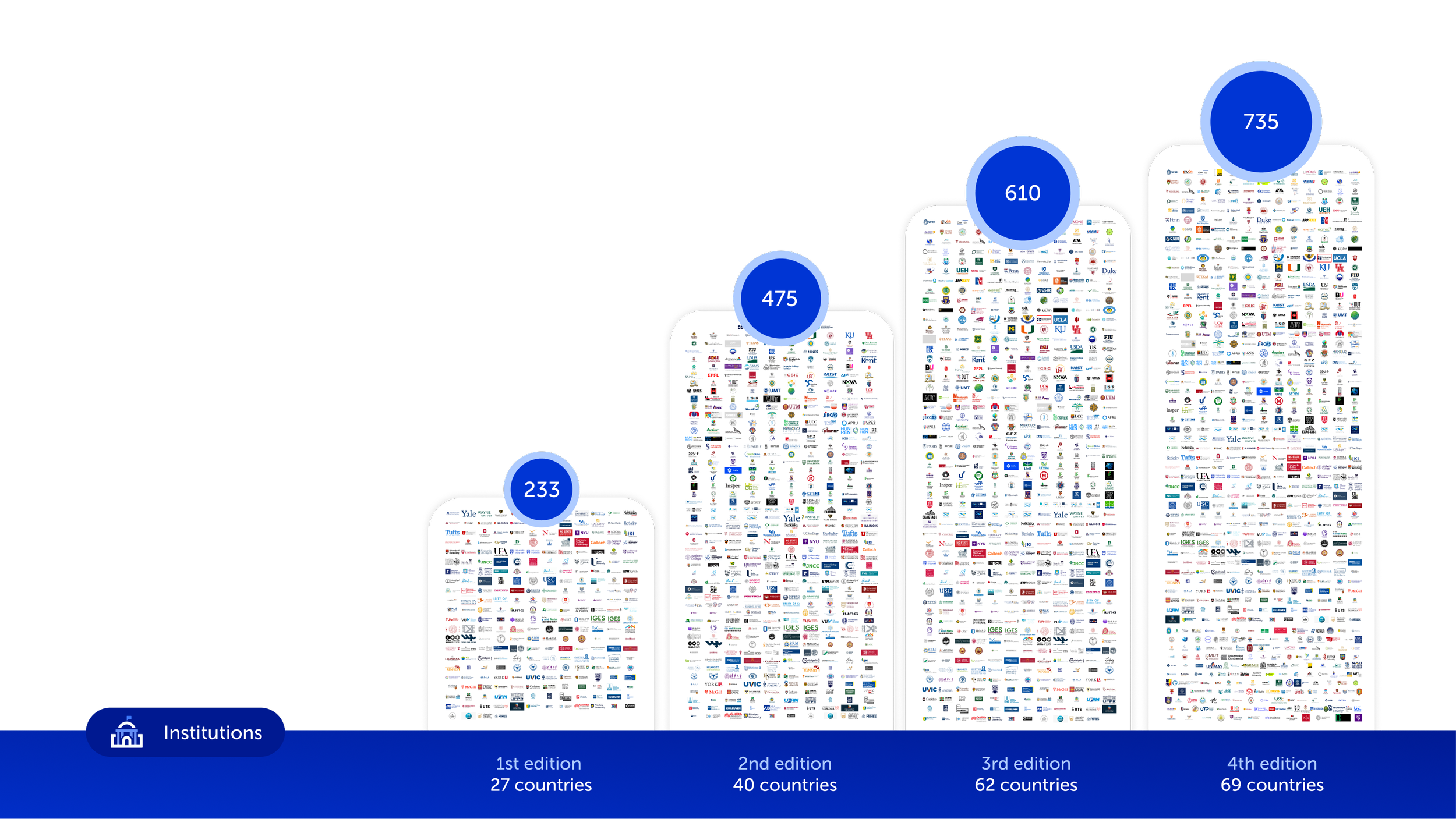
Since we opened our first edition, our institutional network has more than tripled in size, growing from 233 institutions across 27 countries to 735 institutions across 69 countries. The expansion across 69 countries means the Prize is now drawing on a far wider spectrum of scientific perspectives, cultural contexts, and disciplinary approaches, a prerequisite for solutions that work in the real world, not just in theory.
We’re especially proud that 80 of the institutions in the Times Higher Education World University Rankings Top 100 are members of our research community, a testament to the calibre of our nominating network.
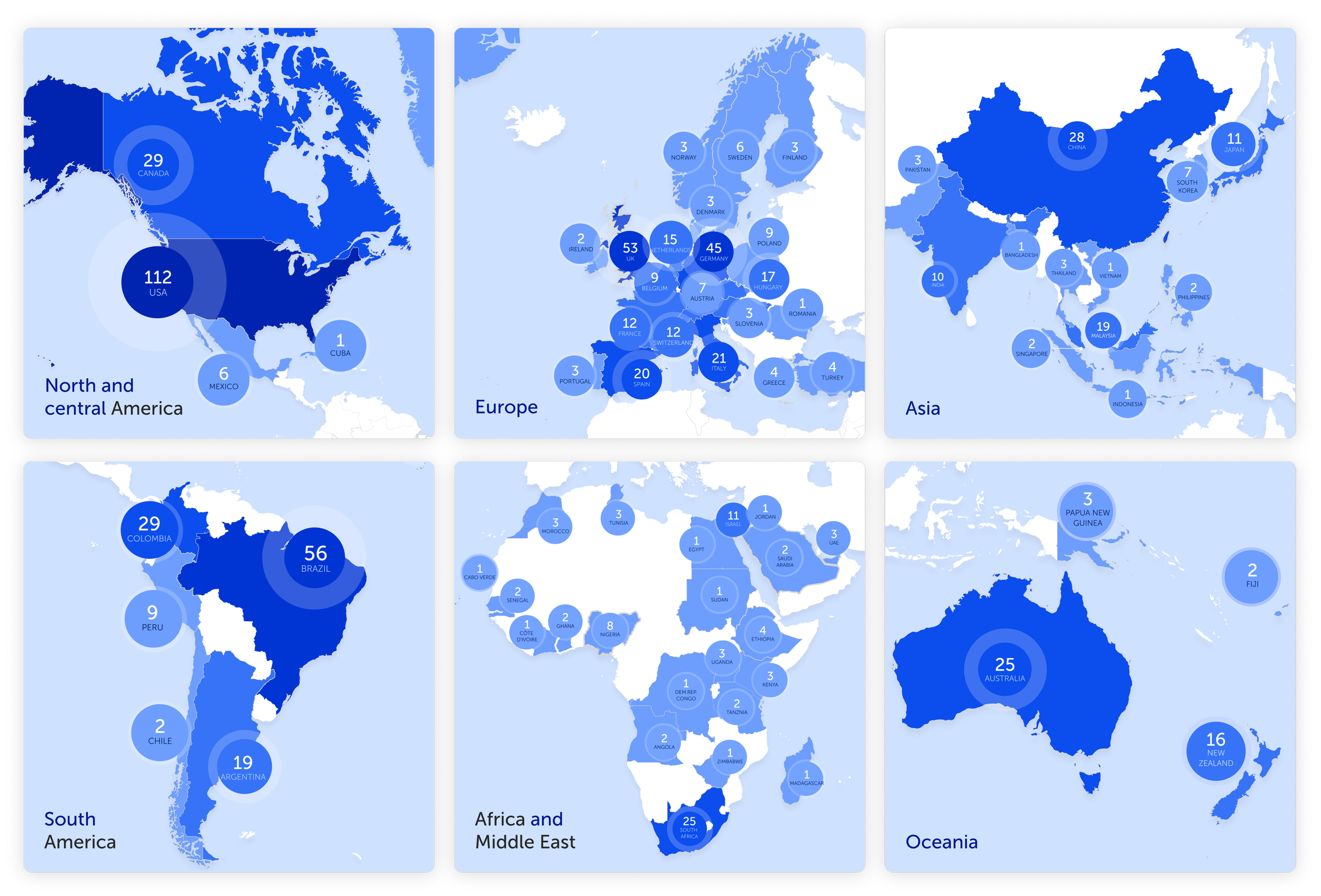
The number of National Representative Bodies (NRBs) has also increased, from 13 in the 1st edition to 23 as we enter the 4th, strengthening regional capacity to identify high-impact research. Notably, we have welcomed increased engagement from academies in Latin America, with Mexico, Colombia, and Peru all joining this year. The Frontiers Planet Prize now counts 6 countries representing 113 institutions across LATAM, signalling a shift toward a more equitable distribution of scientific leadership.
In the United States, 112 institutions are actively participating, including all eight Ivy League universities: Harvard, Yale, Princeton, Columbia, Cornell, Brown, Dartmouth, and the University of Pennsylvania, underscoring the country’s strong commitment to advancing planetary-boundary science.
Our global community of scientists
The Prize now connects a planetary network of researchers advancing transformational science with a cumulative:
· 10,000+ participating scientists
· 100 planetary health experts on our Jury
· 62 National Champions recognised, with 960 co-authors
· 10 International Champions awarded $9.6M USD
Champion research spans every dimension of planetary boundary science, from ecological restoration and food-system redesign to climate-resilient infrastructure, environmental justice, and next-generation monitoring technologies. Explore their projects, impact stories, and latest updates through our growing archive of news and features.
Mobilizing Knowledge for Action
A defining metric of the Prize’s success is real-world impact. The visibility and credibility that come with winning are evident in the data: research recognised by the Frontiers Planet Prize is cited 34 times more often than comparable studies in its field (1), clear evidence of both scientific excellence and societal relevance.
Yet amplification alone is not the goal. By grounding funding, recognition, and global network support in tangible interventions, the Prize accelerates the translation of breakthrough science into actionable solutions that inform policies, guide industries, stimulate collective action and empower communities.
The work of our National Champions has already been cited in 380 policy documents from over 96 policy sources (2), including the World Bank, United Nations, and national governments, highlighting the growing influence of their science in shaping global decision-making.
The Global Stage: Events and Initiatives
The Foundation actively facilitates opportunities for our winning scientists to present their work on national and international stages, and to participate in initiatives that bridge science with policy, industry, and society. Below is a snapshot of the events our Champions have recently contributed to, and those where they will be sharing their research in the months ahead.
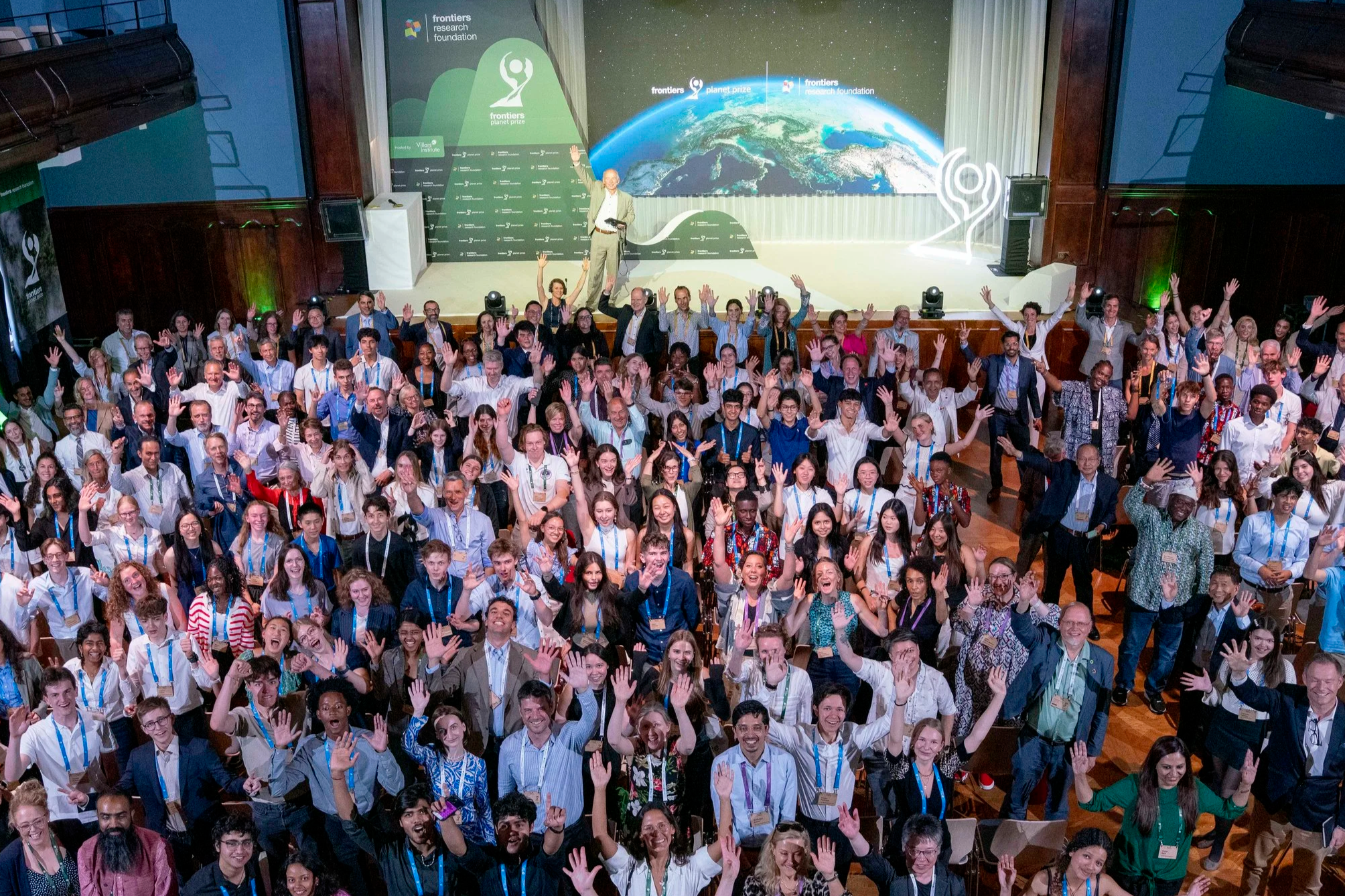
The 2025 Frontiers Planet Prize Award Ceremony marked a key milestone in this mission, celebrating our 3rd Edition Champions and convening the open planetary science community in dialogue around transformative solutions. The event also featured a speech from Kurt Vandenberghe, Director-General for Climate Action at the European Commission, and an address from our Executive Director, Jean-Claude Burgelman, underscoring the Prize’s growing influence in shaping science–policy collaboration.
At the 2025 National Sustainability Society Conference, the session “The Frontiers Planet Prize: Scientific Consensus in Action” brought together leading researchers to explore how science can drive transformative change for a just and sustainable future within a safe planetary operating space. The event celebrated the North American National Champions of the Prize.
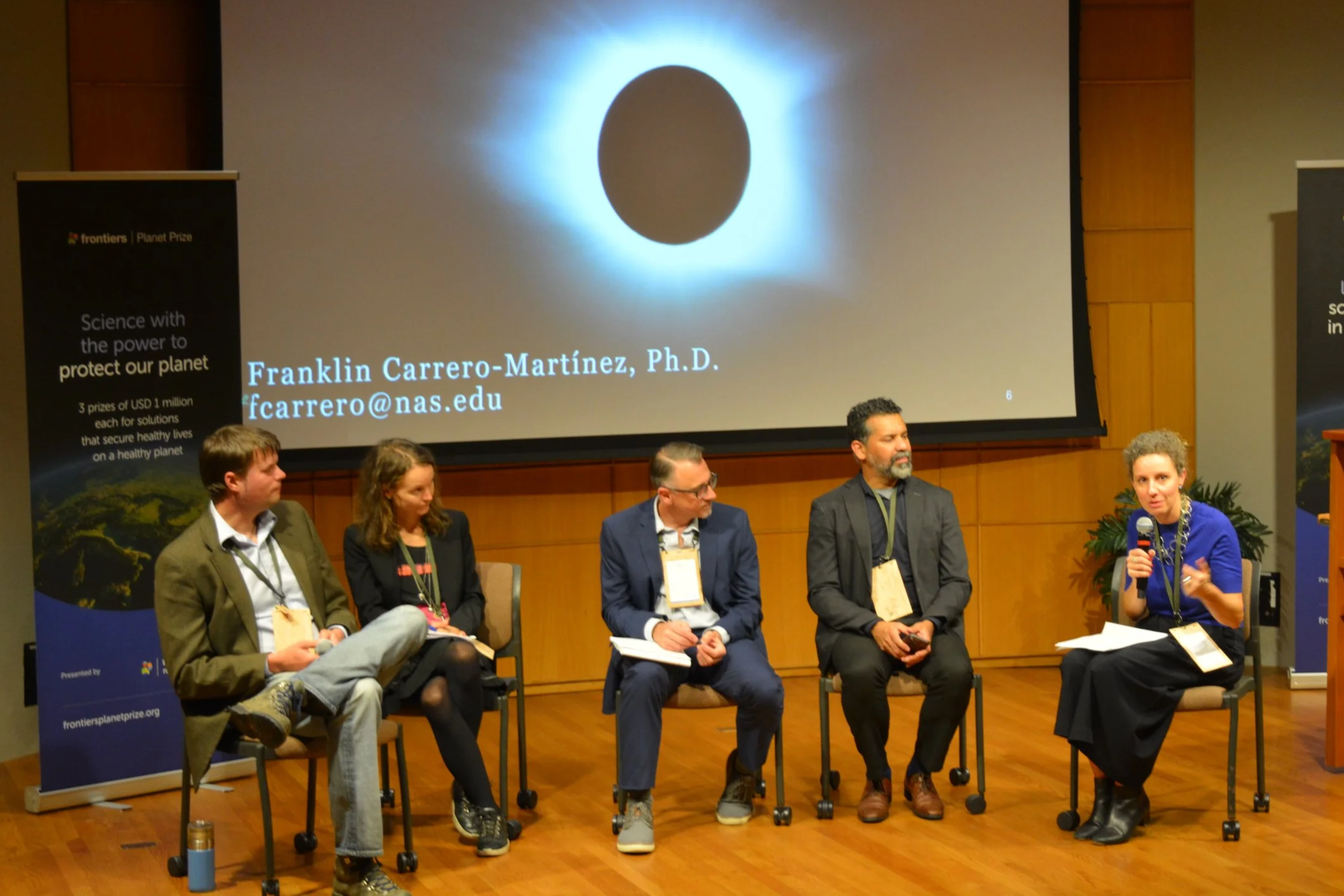
National Sustainability Society Conference 2025: Scientific Consensus in Action. From left to right: Edward Kolodziej (University of Washington, 1st Edition National Champion), Laura Vang Rasmussen (University of Copenhagen, 3rd Edition International Champion Co-Author), Jason Rohr (University of Notre Dame, 2nd Edition International Champion), Franklin Carrero-Martinez (Senior Director of Global Sustainability and Development at the National Academies of Sciences), and Julia Kostova (Director of Open Science Solutions for North America, Frontiers).
During Falling Walls 2025, the Prize hosted a plenary session titled “Frontiers Planet Prize: Can Science Save the Planet?” The session explored how to inspire action and mobilize scientists, funders, policymakers, and the private sector in a geopolitical context where inaction too often prevails. At the same event, Zahra Kalantari, 2025 International Champion for Sweden, delivered a keynote address, “Breaking the Wall of Carbon Neutral Cities." Her research demonstrates how cities can become powerful drivers of climate action, showing that through strategic deployment of nature-based solutions, urban areas can reduce emissions while improving public health, resilience, and quality of life.

Falling Walls 2025: Can science save the planet? Pictured: Jean-Claude Burgelman (Director, Frontiers Planet Prize), Johanna Putz (Managing Director and Partner, Boston Consulting Group, Germany), Michiel Scheffer (Directorate-General for Research and Innovation, President of European Innovation Council, Netherlands), Prof Zahra Kalantari (KTH Royal Institute of Technology, 3rd Edition International Champion, Sweden), Genevieve Biggs (Program Director, Wildfire Resilience Initiative and Special Projects, Gordon and Betty Moore Foundation), Prof Robert Arlinghaus (Leibniz Institute of Freshwater Ecology and Inland Fisheries, 3rd Edition National Champion, Germany). Image courtesy of the Falling Walls Foundation. Source: Falling Walls Science Summit 2025.
The Frontiers Planet Prize community took part in three key panels at COP30, chaired by our Associate Director, Dr Gilbert DeGregorio, showcasing how science can drive tangible planetary impact. The first session, in partnership with Swissnex, “Mobilizing Science for Planetary Impact,” highlighted the need for community-led research agendas, open data, and a stronger focus on climate-driven threats such as forest fires. At the Planetary Science Pavilion panel “Emerging Technology Solutions for Planetary Health,” experts discussed equitable technology deployment, energy transitions, and how to motivate global change with policy initiatives. At the UNFCCC/UGIH panel “From Breakthrough to Impact,” used Instituto Juruá, a non-profit initiative supporting collaboration for community-driven natural resource management, as a case study to illustrate how research, partnerships, funding, and communication can support long-term conservation impact even through political shifts.
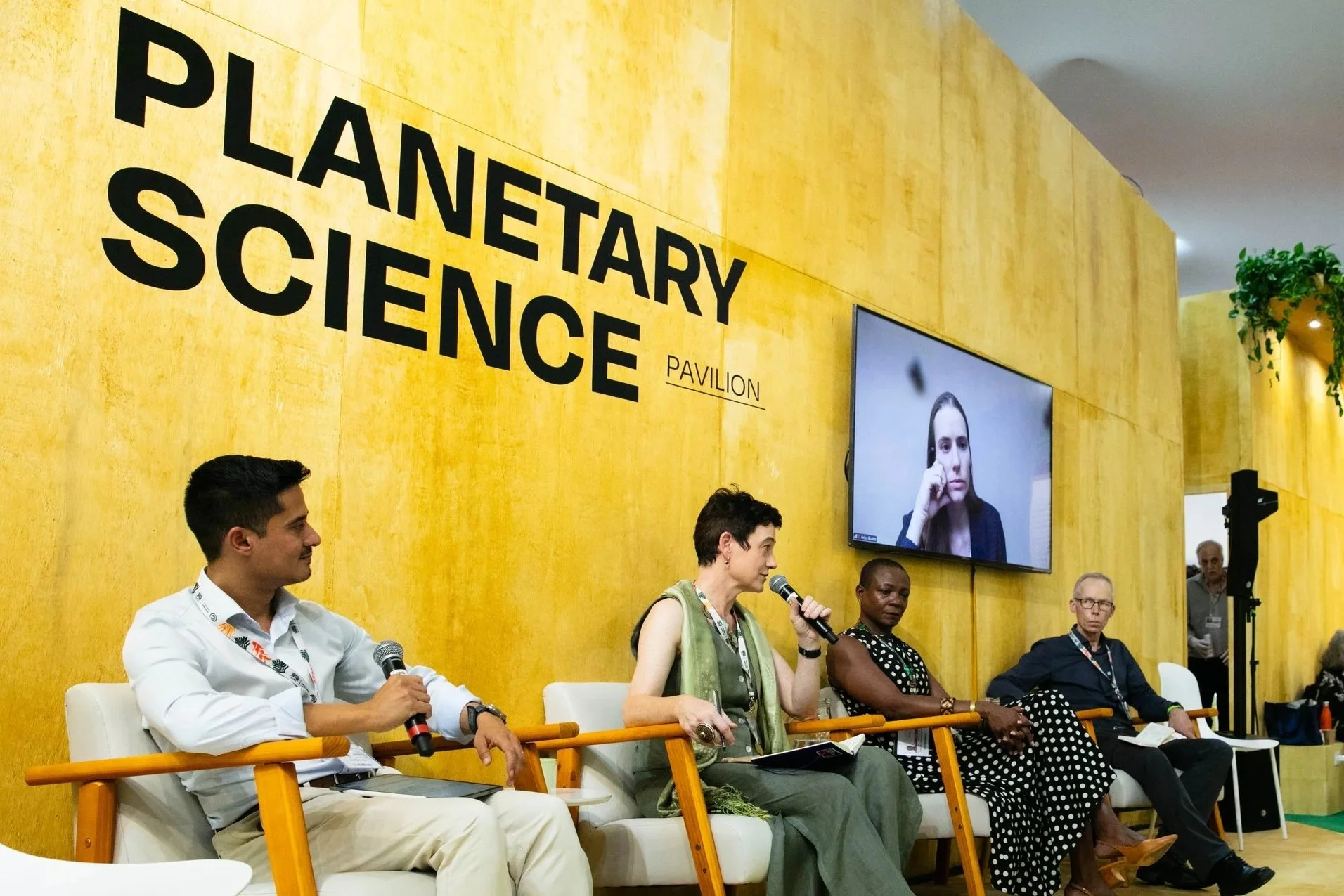
COP30, Planetary Science Pavilion: Emerging Technology Solutions for Planetary Health. From left to right: Dr Gilbert De Gregorio (Associate Director, Frontiers Planet Prize), Kirsten Dunlop (CEO, Climate-KIC), Tonika Sealy-Thompson (Ambassador of Barbados to Brazil), Helen Burdett (Head of Planetary Solutions, World Economic Forum), Prof Johan Rockstrom (Director, Potsdam Institute for Climate Impact Research & Jury Chair, Frontiers Planet Prize). Image courtesy of Climate Acceptance Studios.
At Science Forum South Africa 2025, our Director, Prof Jean-Claude Burgelman, was invited to speak on several of the event’s most influential platforms, contributing keynote addresses and engaging as a panellist on themes that resonate at the intersection of science, policy and sustainable development. The Forum also hosted the first African Planet Prize ceremony. Developed in alignment with the vision of the Frontiers Planet Prize, it highlights emerging African researchers whose work strengthens the evidence needed to safeguard a stable and resilient future. Each winner received a USD $5,000 award to accelerate their work advancing planetary health solutions. The three winners also advance automatically as entries into the Frontiers Planet Prize.
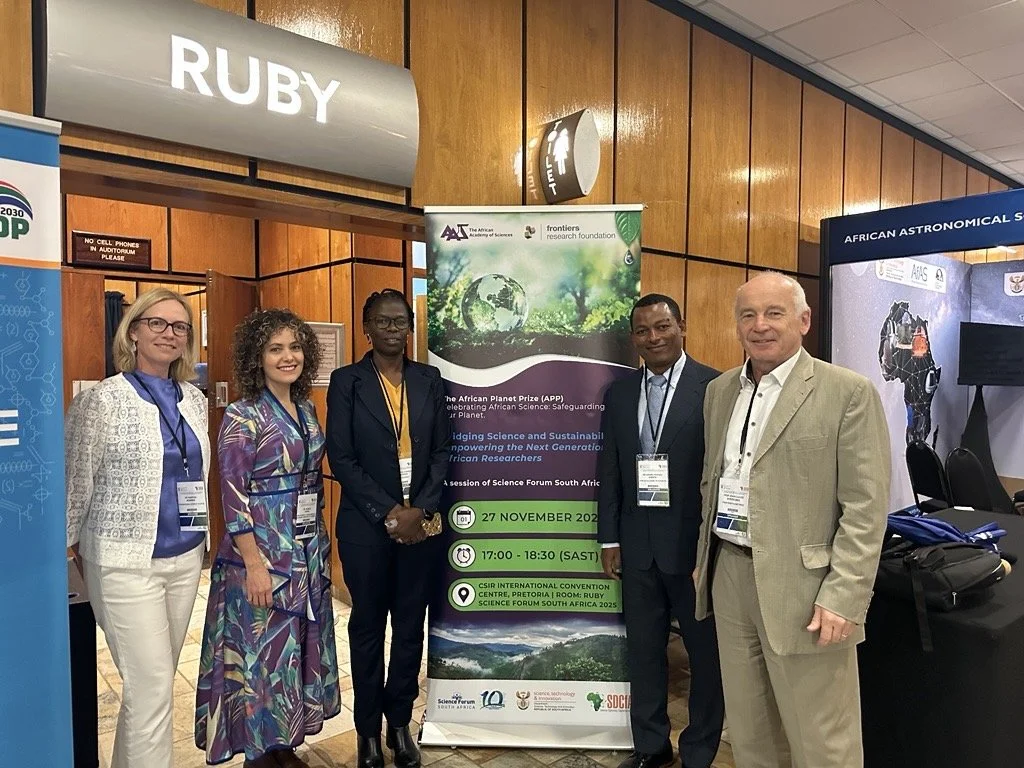
Science Forum South Africa, 2025: The African Planet Prize winners, Dr Jessica Nosizwe Thorn (University of Namibia and Imperial College London), Dr Debora Charles Kajeguka (KCMC University, Kilimanjaro, Tanzania), and Dr Addisu Fekadu Andeta (Arba Minch University, Ethiopia), alongside Dr Vanessa McBride (Science Director, International Science Council) and Prof Burgelman (Director, Frontiers Planet Prize).
In January 2026, the new Frontiers Science House will open its doors in Davos during the World Economic Forum Annual Meeting, serving as a bridge between science and actionable policy, and providing a platform for our champions to showcase their award-winning work further.
“Science shows us a clear path ahead and gives us a powerful opportunity to address the planetary crisis. It will take collective effort, a massive mobilisation of science, and a reinvention of how we live and innovate - a global green renaissance.”
- Prof Jean-Claude Burgelman, Director of Frontiers Planet Prize
Call to Action
As planetary pressures intensify, the Prize calls on the global research community, policymakers, funders and innovators to collaborate in translating scientific breakthroughs into real-world solutions.
We have a long way to go to save our planet.
If you want to go fast, go alone:
If you want to go far, go together,
Join us!
For information on how to get involved, please contact us at planetprize@frontiersin.org.
(1) Calculated using Dimensions data, based on Field Citation Ratio (FCR) indicates the relative citation performance of an article, when compared to similarly-aged articles in its subject area
(2) Data obtained from the Overton policy database